

Especificações principais
- Construction
- Fabricated steel, cast steel, or composite
- Base Hardness
- 250-350 HB (body), 55-62 HRC (hardfacing)
- Balancing
- Dynamic balancing to ISO 1940 G6.3 or better
- Diameter Range
- 800-1,600 mm depending on model
- Weight Range
- 1,500-12,000 kg (complete assembly)
- OEM Brands
- Metso, Sandvik, Terex, Kleemann, Hazemag, McCloskey
- Pocket Configurations
- 2, 3, or 4 blow bar positions
Rotor Construction Options
Rotor bodies are constructed from high-strength steel using fabricated or cast methods. The choice depends on the original design and operational requirements.
| Material | Dureza | Aplicação | Notas |
|---|---|---|---|
| Fabricated Steel Rotor | 250-300 HB base material | Standard replacement for fabricated OEM designs | Precision welded construction, stress relieved |
| Cast Steel Rotor | 250-350 HB | Replacement for cast OEM designs, heavy-duty applications | Single-piece construction, no weld joints |
| Rebuilt Rotor (Hardfaced) | 55-62 HRC surface overlay | Refurbishment of worn rotors with good core condition | Pockets restored, surfaces protected |
| Composite Rotor | Varies by zone | High-performance applications requiring zoned wear protection | Wear-resistant inserts in high-impact areas |
Fabricated Steel Rotor
Cast Steel Rotor
Rebuilt Rotor (Hardfaced)
Composite Rotor
Note: Rotor design varies significantly between models. Contact ATF with your specific crusher model for rebuild or replacement options.
HSI Rotor Bodies: The Heart of Impact Crushing
The rotor is the central and most critical structural component of any HSI impact crusher, typically representing 20-30% of the total machine value. It supports and positions the blow bars at precise radial locations, withstands the reaction forces from high-velocity impacts that can generate instantaneous loads exceeding 200 kN per blow bar, and transfers crushing energy to the feed material through controlled rotational momentum. Rotor design directly influences crushing efficiency, product shape, reduction ratio, and the service life of all other wear parts in the machine. Rotors are manufactured from high-strength steel with base hardness of 250-350 HB, using either fabricated (precision welded and stress-relieved) or cast construction methods depending on the original OEM design. A damaged or worn rotor body with degraded blow bar pockets, surface erosion, or balance issues compromises the entire crushing process and accelerates wear throughout the machine.
ATF manufactures replacement rotor bodies to original specifications with strict attention to dynamic balance (conforming to ISO 1940 Grade G6.3 or better), dimensional accuracy at all critical interfaces, and blow bar pocket geometry. Proper rotor balance is critical because an unbalanced rotor operating at tip speeds of 25-45 m/s generates cyclic forces that propagate through bearings, housing structures, and foundation systems, accelerating fatigue failure across the entire machine. All ATF rotors are dynamically balanced on precision balancing equipment before shipment, with balance reports provided on request. Rotor rebuilding services are also available for rotors with good structural integrity but worn pockets or eroded surfaces. The rebuild process includes non-destructive examination (NDE), pocket restoration by weld buildup and machining, optional hardfacing with 55-62 HRC overlay on exposed surfaces, and final dynamic balancing to ensure the rebuilt rotor meets or exceeds original performance specifications.
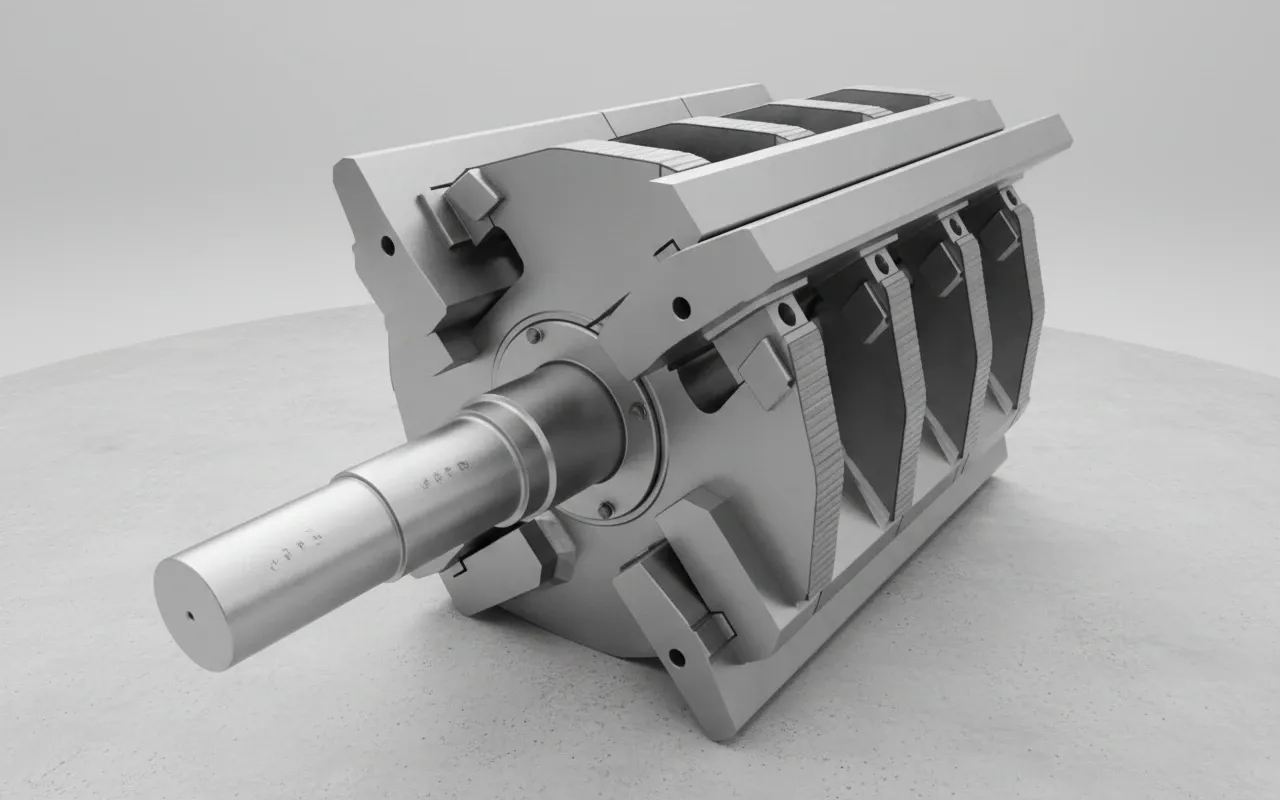
Complete rotor assembly with precision-machined blow bar seats — dynamic balancing to ISO 1940 ensures vibration-free operation
Key Features of ATF HSI Rotors
Precise Pocket Geometry
Blow bar pockets machined to exact dimensions for secure seating and correct bar positioning. Proper pocket geometry is critical for safe operation.
Dynamic Balancing
All rotors dynamically balanced to minimize vibration. Balancing includes provisions for blow bar weight variations.
High-Strength Materials
Rotor bodies manufactured from high-strength steel with appropriate impact resistance. Weld repairs and rebuilds to original material specifications.
Shaft Interface Precision
Bore and keyway dimensions held to tight tolerances for secure shaft mounting without stress concentrations.
Hardfacing Options
Optional hardfacing on rotor body surfaces to protect against abrasive wear between blow bar changes.
Complete Assemblies
Rotors supplied as bare bodies or complete assemblies with shaft, bearings, and retention hardware.
Need a Replacement or Rebuilt Rotor?
Send your crusher model and rotor serial number for assessment and quotation.
OEM Compatibility
ATF supplies new and rebuilt rotors for all major HSI crusher manufacturers. Rotors are matched to original design specifications.
Metso
- NP1007, NP1110, NP1213, NP1315, NP1520
- Lokotrack LT1110, LT1213, LT1315
Sandvik
- CI411, CI511, CI611, CI711, CI821
- QI240, QI340, QI440, QI540
Terex
- Finlay I-100, I-110, I-120, I-130, I-140
- Trakpactor 230, 260, 320, 500
Kleemann
- MR 110, MR 130, MR 150, MR 170
Hazemag
- AP5, AP6, AP7
- APK30, APK40, APK50
McCloskey
- I34, I44, I54
Rotors Perguntas frequentes
Encontre respostas para perguntas comuns sobre rotors materiais, seleção, manutenção e pedidos. Não encontrou o que procura?
Contatar nossa equipeWhen should a rotor be replaced vs. rebuilt?
How critical is rotor balance?
What causes blow bar pocket wear?
Can rotor speed be changed?
Conteúdo técnico revisado pela equipe de engenharia da ATF | Especificações metalúrgicas verificadas conforme normas ASTM/ISO
Get a Rotor Assessment
Send photos and dimensions of your current rotor for rebuild assessment or new rotor quotation.
Contact ATF Engineering