

Key Specifications
- Material Grades
- AISI 4140, AISI 4340, EN19 (709M40), EN24 (817M40)
- Hardness Range
- 28-36 HRC (quench and temper)
- Journal Tolerance
- h6 / h7 per ISO 286
- Inspection
- Ultrasonic (UT) per ASTM A388, MPI optional
- Tensile Strength
- 850-1,100 MPa depending on grade
- OEM Brands
- Metso, Sandvik, Terex, Kleemann, Hazemag, McCloskey
- Diameter Range
- 120-350 mm depending on crusher model
HSI Crusher Shafts: Precision Forged for Demanding Service
The main shaft is the primary structural link in an HSI impact crusher, carrying the rotor assembly and transmitting all crushing forces through the bearings to the housing structure. It must withstand continuous cyclic loading from impact forces that can generate instantaneous bending moments exceeding 50 kNm, torsional loads from the drive system delivering 75-500 kW of crushing power, and static bending moments from the rotor mass of 1,500-12,000 kg. Shafts are manufactured from premium forged alloy steels such as AISI 4140 or AISI 4340 (or their European equivalents EN19 and EN24), quenched and tempered to achieve 28-36 HRC with tensile strengths of 850-1,100 MPa. Shaft failure is a catastrophic event that destroys bearings, damages housings, and halts production entirely, with typical repair timelines of 4-8 weeks and costs that can exceed the value of the crusher itself.
ATF manufactures replacement shafts from premium forged alloy steel billets with full material traceability and strict dimensional control at all critical surfaces. Shaft bearing journals are ground to h6 or h7 tolerances per ISO 286, with surface finishes of Ra 0.8 or better to ensure proper interference fit with inner bearing races and prevent fretting corrosion. Keyways and drive interfaces are machined to precise geometry with controlled corner radii to minimize stress concentration factors that could initiate fatigue cracks. All ATF shafts undergo ultrasonic inspection per ASTM A388 to verify material integrity and detect subsurface defects such as inclusions, voids, or forging laps. Magnetic particle inspection (MPI) of finished surfaces is available on request for additional assurance of surface integrity at critical stress concentration points. Each shaft ships with a material test certificate, dimensional inspection report, and UT test results for complete documentation.
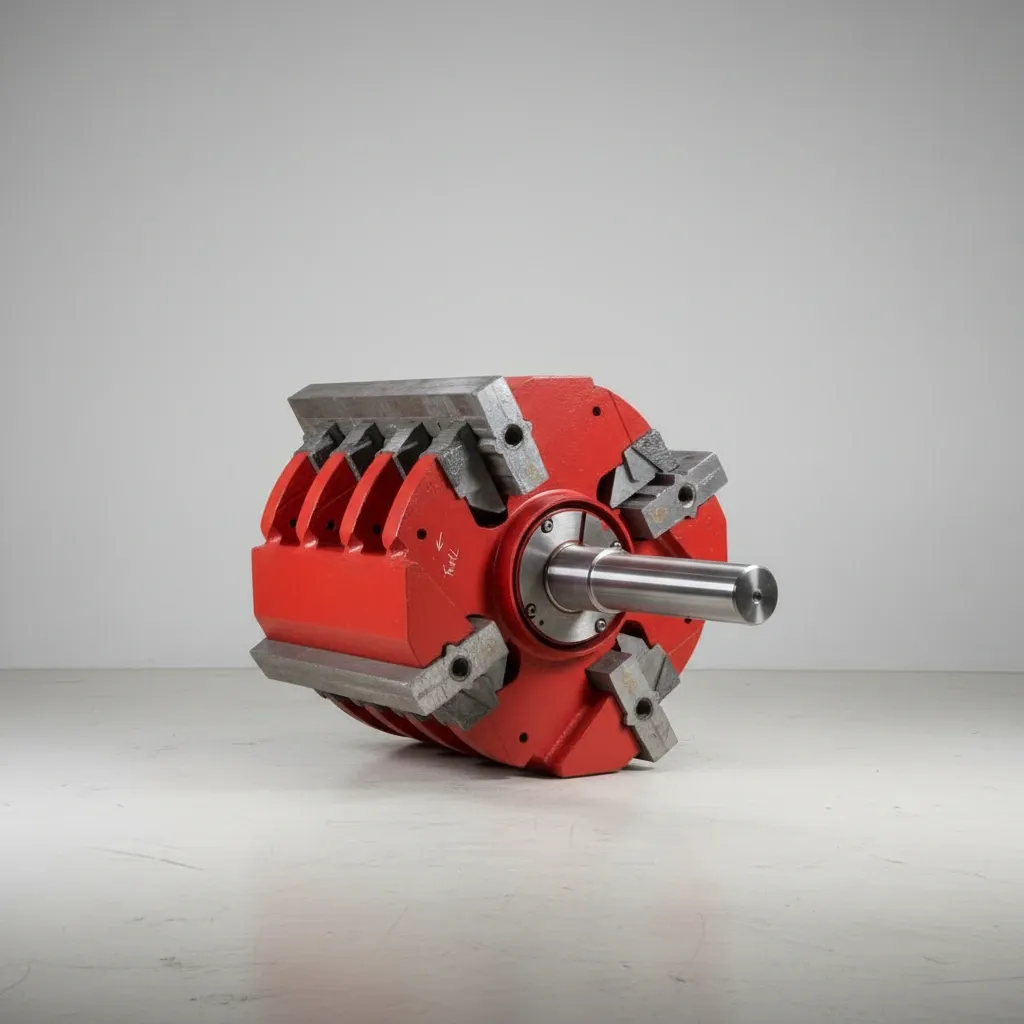
Forged AISI 4140/4340 main shaft with precision-ground bearing journals — ultrasonic tested per ASTM A388
Key Features of ATF HSI Shafts
Premium Forged Material
Shafts forged from 4140, 4340, or equivalent alloy steel for optimal strength, toughness, and fatigue resistance.
Precision Machining
All journals, seats, and interfaces CNC machined to OEM tolerances. Surface finishes specified for proper bearing and seal function.
Heat Treatment
Quench and temper heat treatment to achieve specified hardness with appropriate toughness for cyclic loading conditions.
Non-Destructive Testing
Ultrasonic inspection to detect internal flaws. Magnetic particle inspection of finished surfaces on request.
Keyway Options
Standard and custom keyway configurations for drive and rotor mounting. Key fit matched to original specification.
Protective Packaging
Rust-preventive coating and heavy-duty packaging for safe shipping and storage prior to installation.
Shaft Material Specifications
Shaft material selection depends on the loading severity and original design specification. Higher-alloy steels provide improved fatigue strength for heavy-duty applications.
| Material | Hardness | Application | Notes |
|---|---|---|---|
| AISI 4140 Alloy Steel | 28-32 HRC | Standard replacement for most medium-duty HSI crushers | Good balance of strength and machinability |
| AISI 4340 Alloy Steel | 30-36 HRC | Heavy-duty applications, large rotors, high-impact service | Higher toughness and fatigue strength |
| EN19 (709M40) | 28-34 HRC | European specification equivalent to 4140 | Common OEM specification |
| EN24 (817M40) | 30-36 HRC | European specification for heavy-duty shafts | Higher nickel content for improved toughness |
AISI 4140 Alloy Steel
AISI 4340 Alloy Steel
EN19 (709M40)
EN24 (817M40)
Note: Material specification should match or exceed original OEM design. Contact ATF with shaft drawings or OEM part numbers for material confirmation.
Need a Replacement Shaft?
Send your crusher model and shaft dimensions for quotation. Drawings and worn shafts can be used for reverse engineering.
OEM Compatibility
ATF manufactures replacement shafts for all major HSI crusher brands. Shafts are produced to original specifications or can be reverse-engineered from samples.
Metso
- NP1007, NP1110, NP1213, NP1315, NP1520
- Lokotrack LT Series
Sandvik
- CI411, CI511, CI611, CI711, CI821
- QI Series Mobile
Terex
- Finlay I-100, I-110, I-120, I-130, I-140
- Trakpactor 230, 260, 320, 500
Kleemann
- MR 110, MR 130, MR 150, MR 170
Hazemag
- AP5, AP6, AP7
- APK30, APK40, APK50
McCloskey
- I34, I44, I54
Shafts FAQs
Find answers to common questions about shafts materials, selection, maintenance, and ordering. Can't find what you're looking for?
Contact Our TeamWhat causes shaft failure in HSI crushers?
Can a worn shaft be rebuilt?
What tolerances are critical for crusher shafts?
What information is needed to quote a replacement shaft?
Technical content reviewed by ATF Engineering Team | Metallurgical specifications verified against ASTM/ISO standards
Order a Precision-Machined Replacement Shaft
Provide your crusher model and shaft specifications for quotation with material certification.
Contact ATF Engineering