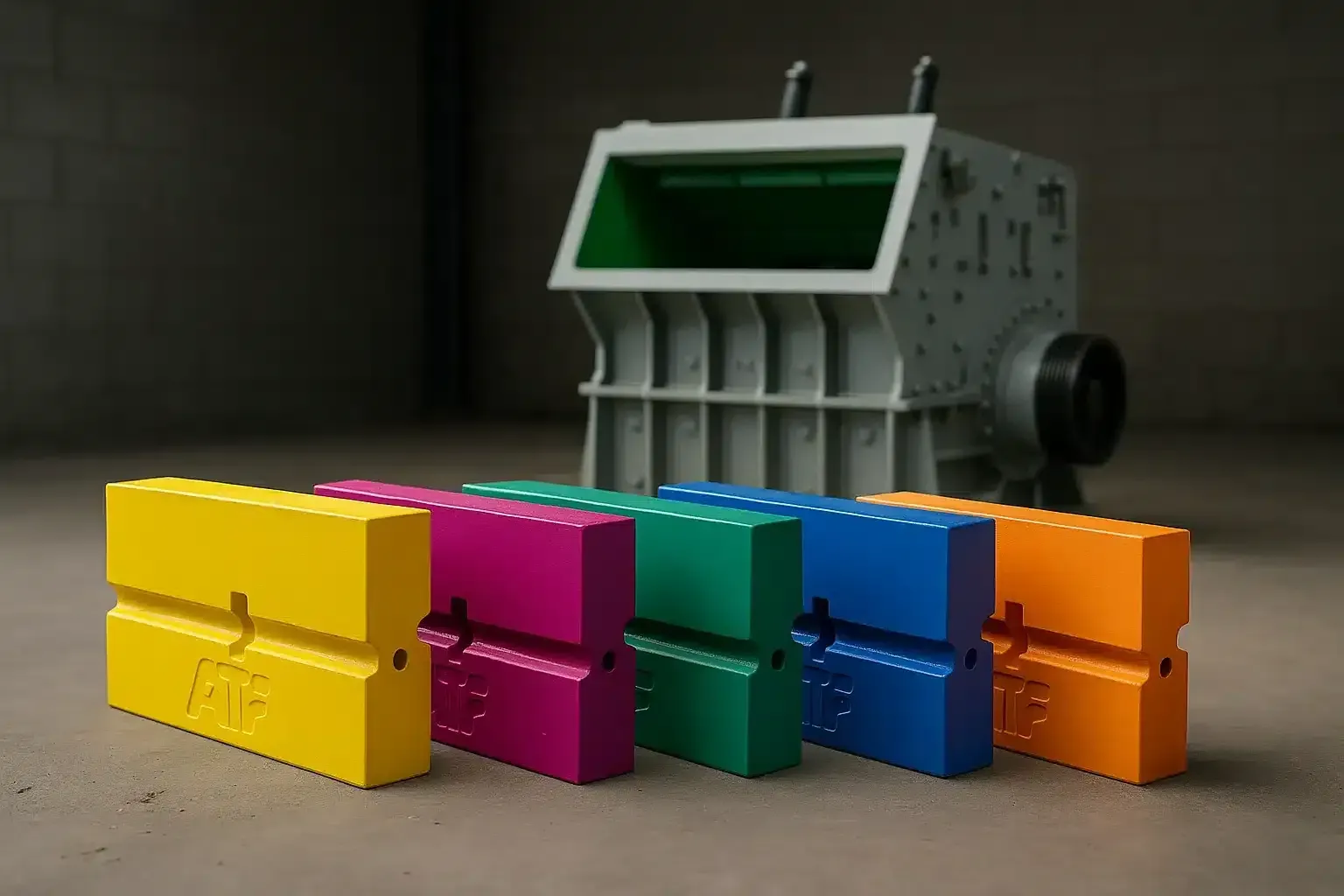
Die Wahl des richtigen Werkstoffs für Schlagleisten ist eine der folgenreichsten Entscheidungen für Ihren HSI-Prallbrecher. Die falsche Legierung verursacht Mehrkosten – entweder durch vorzeitigen Verschleiß oder durch unnötige Überdimensionierung. Dieser Leitfaden vergleicht die beiden am häufigsten eingesetzten Schlagleisten-Werkstoffe: hochchromhaltigen Weißguss und martensitischen Stahl, ergänzt um einen kurzen Überblick zu Manganstahl und Verbundwerkstoff-Optionen. Für den vollständigen Vergleich aller 9 Werkstoffe einschließlich Keramik- und TiC-Verbundwerkstoffen, Lieferzeiten und Rotationsplänen siehe unseren umfassenden Werkstoffleitfaden für Schlagleisten.
Vollständiger 9-Werkstoff-Leitfaden für Schlagleisten
Vergleichen Sie alle Werkstoffe einschließlich Keramik- und TiC-Verbundwerkstoffen, mit Lieferzeiten und Rotationsplänen.
Hochchromhaltiger Weißguss (ASTM A532 Class III)
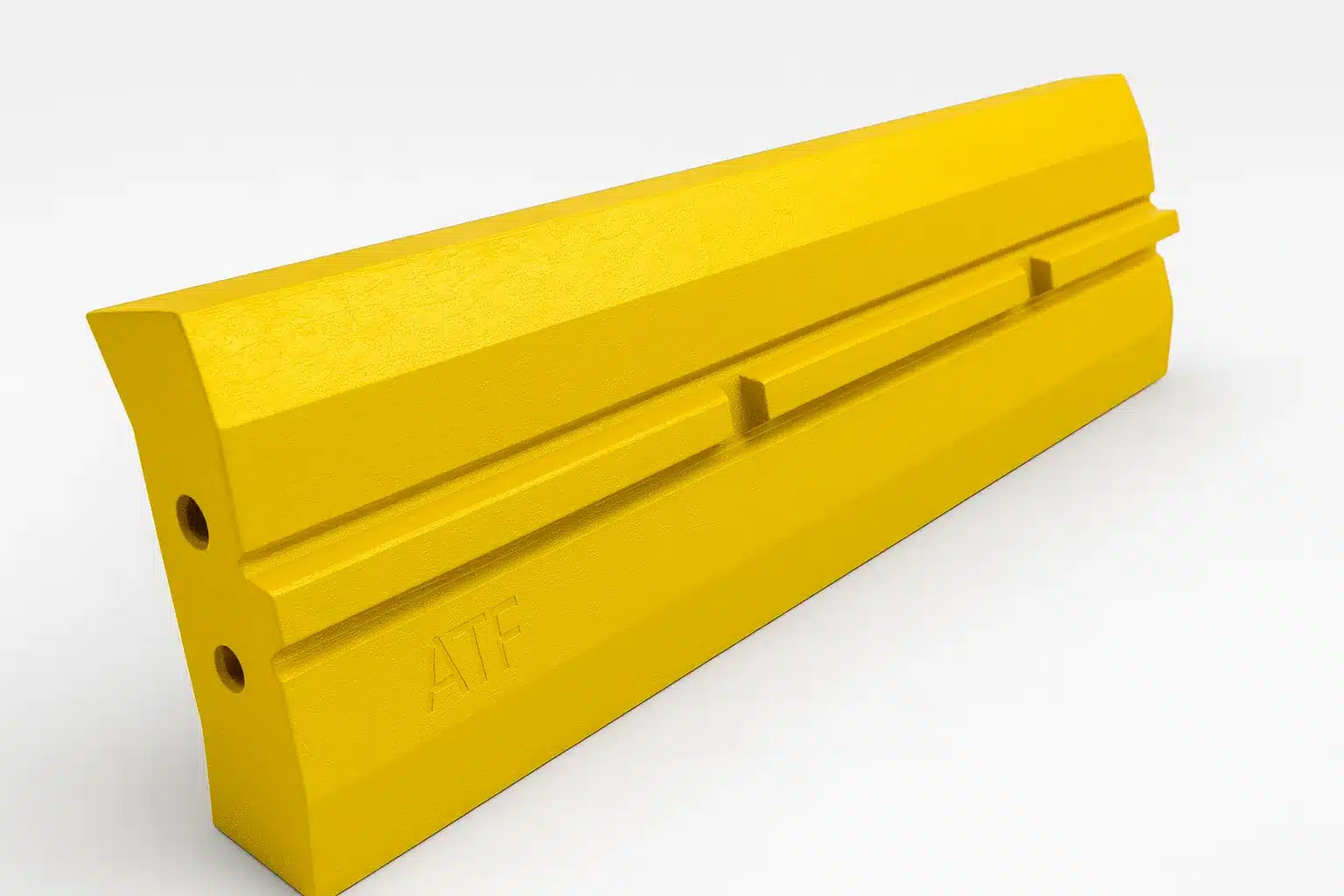
Hochchromhaltiger Weißguss ist die Wahl mit maximaler Abriebfestigkeit für Schlagleisten. Sein dichtes Chromcarbid-Gefüge erreicht eine Härte von 60–64 HRC und macht ihn zum Spitzenreiter in sauberen, abrasiven Sekundär- und Tertiärbrecheranwendungen.
- Härte: 60–64 HRC
- Entspricht ASTM A532 Class III Type A
- Maximale Verschleißfestigkeit durch Chromcarbid-Gefüge
- Schlagverhalten: spröde – nicht geeignet bei Beistoffen aus Metall oder großen, nicht zerkleinerbaren Stücken
- Sauberer Kalkstein und Basalt im Sekundär-/Tertiärkreislauf
- Flusskies und natürliche Zuschlagstoffe
- Brechsand-Produktion
- Anwendungen mit zuverlässiger Eisenabscheidung im Vorfeld
Angelassene Hochchrom-Variante (55–58 HRC)
Für Betriebe mit wechselnden Steinbruchbedingungen und gelegentlich auftretenden unerwarteten Schlägen reduziert eine angelassene Ausführung die Härte auf 55–58 HRC. Dieser kontrollierte Kompromiss opfert 10–15 % Standzeit, senkt aber die Sprödigkeit deutlich. Eine praxisgerechte Wahl, wenn die Sauberkeit des Aufgabeguts nicht zu 100 % gewährleistet werden kann.
Martensitischer Stahl
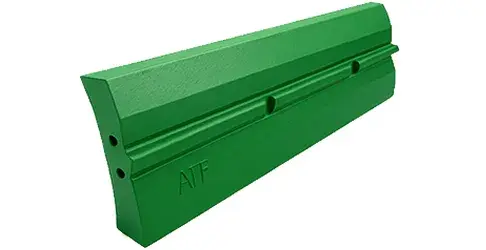
Martensitischer Stahl ist eine vergütete Legierung, die bereits mit 48–54 HRC ausgeliefert wird. Anders als Manganstahl ist er nicht auf Kaltverfestigung angewiesen – er ist ab dem ersten Schlag wirksam. Damit ist er der Werkstoff der Wahl für Betonrecycling und Abbruch, wo die Schlagenergie hoch, der Abrieb jedoch moderat ist.
- Härte: 48–54 HRC im Anlieferungszustand
- Keine Kaltverfestigung erforderlich – sofort wirksam
- Mittlere bis hohe Schlagzähigkeit – verträgt Schläge durch Bewehrungsstahl ohne katastrophalen Bruch
- Geringere Kosten als Hochchrom
- Betonrecycling mit Bewehrungsstahlanteil
- Gemischter Abbruchabfall
- Aufgabegut mit mäßigem Abrieb und schwankender Schlagbelastung
- Anwendungen, bei denen Beimetalle nicht zuverlässig entfernt werden können
Martensitischer Stahl schließt die Lücke zwischen der Zähigkeit von Manganstahl und der Abriebfestigkeit von Hochchrom. Wenn Ihr Aufgabegut für Manganstahl zu abrasiv ist, aber zu viel Beimetall für Hochchrom enthält, ist martensitischer Stahl in der Regel die richtige Wahl.
Und Manganstahl?
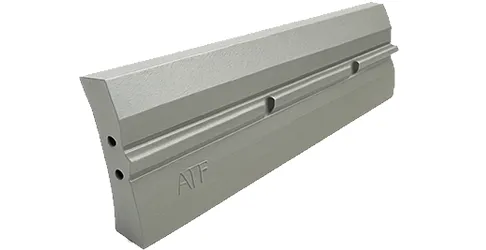
Manganstahl (Mn18Cr2) ist der dritte wichtige Schlagleisten-Werkstoff und verdient in jedem Werkstoffvergleich Erwähnung. Es handelt sich um die klassische kaltverfestigende Legierung: Ausgehend von 200–240 HB verfestigt sich die Oberfläche unter wiederholter Schlagbeanspruchung auf über 500 HB, während der Kern zäh bleibt.
Manganstahl eignet sich am besten für die Primärzerkleinerung und den schweren Abbruch, wo die Schlagenergie extrem hoch ist. Allerdings benötigt er eine ausreichende Schlagkraft zur Aktivierung – in schlagarmen Sekundäranwendungen "verglast" die Oberfläche, statt sich zu verfestigen, was zu schnellem, vorzeitigem Verschleiß führt.
Für einen detaillierten Vergleich aller drei Basislegierungen plus sechs Verbundwerkstoff-Upgrades besuchen Sie unseren vollständigen Werkstoffleitfaden für Schlagleisten.
Werkstoff-Härtevergleich
Rockwell-C-Skala (HRC, äquivalent) – höhere Werte bedeuten größere Härte und Abriebfestigkeit
Werkstoffauswahl-Leitfaden
| Anwendung | Empfohlener Werkstoff | Begründung |
|---|---|---|
| Granit / Basalt (sauber) | Hochchrom (60–64 HRC) | Maximale Abriebfestigkeit für sauberes, hartes Gestein |
| Kalkstein (sekundär) | Hochchrom oder martensitischer Stahl | Chrom gegen Abrieb; martensitischer Stahl bei Schlägen |
| Flusskies | Hochchrom (60–64 HRC) | Abrasive Naturzuschläge, in der Regel sauberes Aufgabegut |
| Betonrecycling | martensitischer Stahl (48–54 HRC) | Verträgt Schläge durch Bewehrungsstahl ohne Bruch |
| Gemischter Abbruch | martensitischer Stahl (48–54 HRC) | Bewältigt wechselndes Aufgabegut und Beimetall |
| Primärzerkleinerung | Manganstahl (Mn18Cr2) | Verfestigt sich unter schwerer Schlagbelastung |
| Wechselnder Steinbruch | angelassener Hochchrom (55–58 HRC) | Kompromiss zwischen Standzeit und Schlagzähigkeit |
Upgrades mit Keramik- und TiC-Verbundwerkstoffen
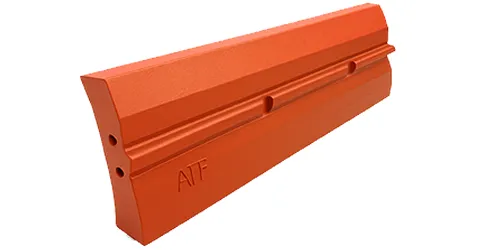
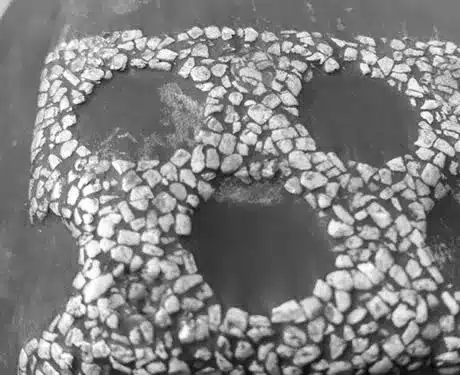
Alle drei Basislegierungen – Hochchrom, martensitischer Stahl und Manganstahl – sind als Upgrade mit Keramikeinsätzen (MMC) oder TiC-Einsätzen erhältlich. Diese Verbundwerkstoffe betten extrem harte Partikel (1600 HV Keramik bzw. 3200 HV Titancarbid) in das Grundmetall ein und verlängern die Standzeit in geeigneten Anwendungen um 30–50 %.
Verbund-Schlagleisten setzen jedoch eine funktionierende magnetische Trennung und Metalldetektion im Vorfeld voraus. Die Einsätze brechen unter Punktlastschlägen durch Beimetall oder unentdeckten Bewehrungsstahl. Sie sind ausschließlich für Betriebe mit kontrolliertem, sauberem Aufgabegut bestimmt.
Erfahren Sie mehr über die Keramikeinsatz-Technologie und die TiC-Einsatz-Technologie oder konsultieren Sie den vollständigen Werkstoffvergleich mit Lieferzeiten.
Kostenlose technische Beratung
Unsere Anwendungsingenieure helfen Ihnen, den richtigen Schlagleisten-Werkstoff für Ihr spezifisches Brechermodell und Ihr Aufgabegut auszuwählen.
Sie benötigen Unterstützung bei der Auswahl?
Die Werkstoffauswahl hängt von Ihrem Brechermodell, den Aufgabegut-Eigenschaften und den betrieblichen Randbedingungen ab. Die Anwendungsingenieure von ATF bieten kostenlose technische Beratungen – kontaktieren Sie uns mit Angabe Ihres Brechermodells und Aufgabematerials für eine Empfehlung, oder konsultieren Sie unseren vollständigen Werkstoffleitfaden für Schlagleisten für detaillierte Spezifikationen aller 9 Werkstoffoptionen.