

Zementwerk-Teile
Klinkerbrecher-Teile | Zementwerks-Ersatzteile | ATF
Klinkerbrecher-Teile: Hämmer, Roststäbe und Prallplatten. Legierungen für heißen Klinkerbetrieb bei 200-400 C.
Heat-Resistant Clinker Crusher Components for Cement Plants
Clinker crushers reduce hot clinker from cooler discharge — typically at 200–400°C — to sizes below 25–30 mm suitable for storage and cement grinding. Standard crusher alloys such as conventional manganese steel and martensitic steels lose 30–50% of their room-temperature hardness at these elevated temperatures, resulting in dramatically accelerated wear rates and unpredictable service life. The combination of elevated temperature, high-velocity impact from clinker nodules and severe abrasion from the hard calcium silicate and aluminate mineral phases in clinker creates unique wear conditions not found in standard crushing applications.
ATF clinker crusher parts use heat-resistant alloy formulations specifically developed for hot material service — including H13 hot-work tool steel maintaining 45–52 HRC at 400°C, high-temperature Cr-Mo steels retaining 47+ HRC, and bimetallic hammer designs combining tough steel bodies with high-chrome white iron wear faces. Grate bars in Ni-Hard Type IV (550–650 HB) resist the combined abrasion and impact at clinker crusher discharge, while rotor components in heat-resistant manganese steel provide the toughness needed for continuous operation.
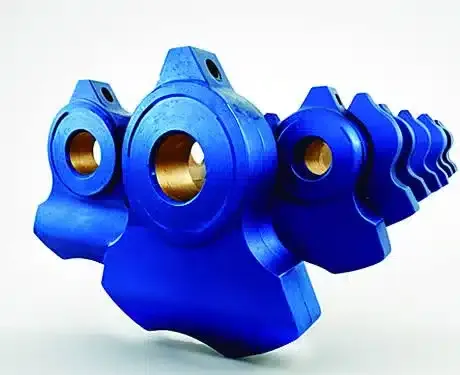
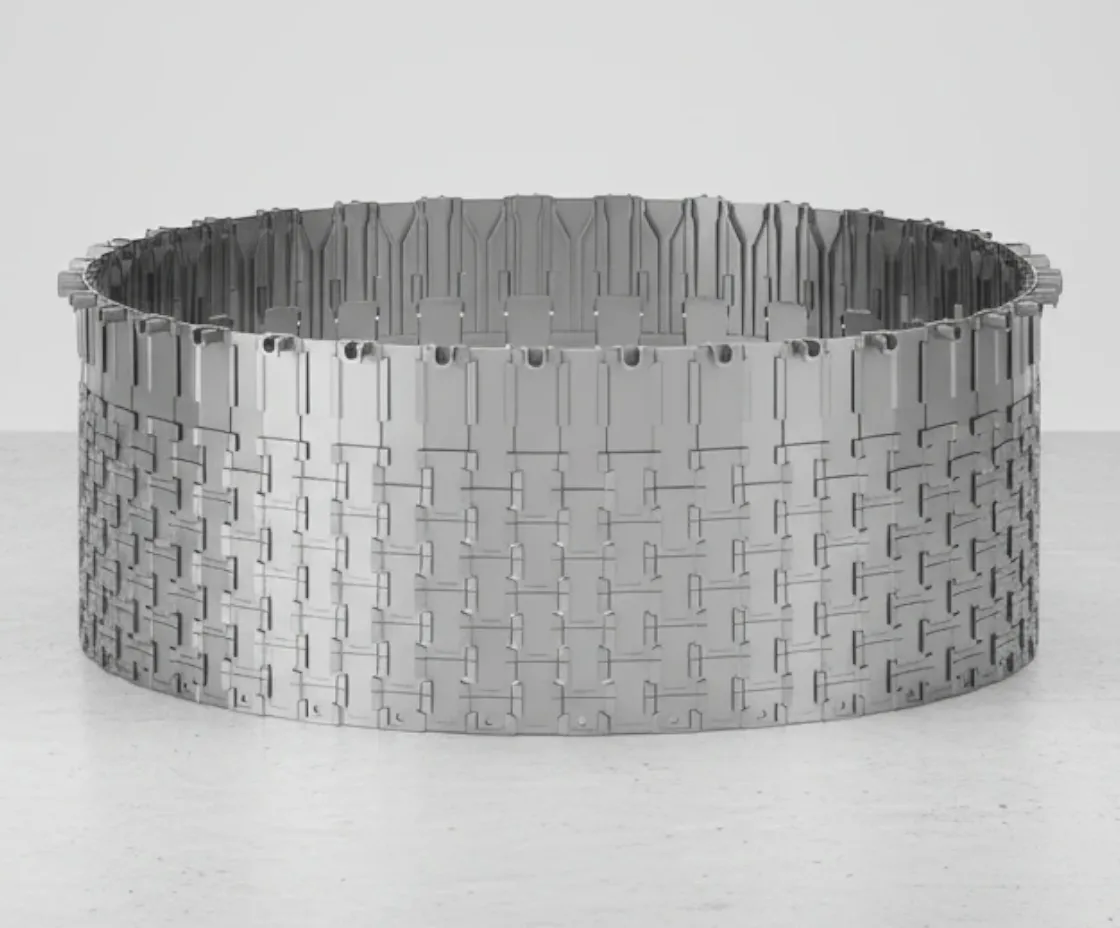
ATF clinker crusher hammers — cast from hot-work tool steel and high-temperature Cr-Mo alloys retaining 45–54 HRC at operating temperatures up to 400°C for continuous cement plant clinker crushing.
How Clinker Crushers Work
Clinker crushers are installed at the discharge end of the clinker cooler, reducing hot clinker nodules to a transportable size. Understanding the thermal-mechanical loading on hammers, grate bars and structural components explains why alloy selection for hot clinker service differs fundamentally from standard crushing applications.
Hot Clinker Feed
Hot clinker discharges from the cooler at 200–400°C (depending on cooler type and efficiency) onto the crusher feed. Clinker nodule sizes range from fine dust to lumps of 50–200 mm, with occasional coating falls or "snowman" clinker reaching 300+ mm. The crusher must handle this entire size range continuously without bridging or blockage — while every component operates at the clinker temperature.
Impact Crushing at Temperature
Rotating hammers strike the clinker at tip speeds of 15–30 m/s, fracturing nodules by high-velocity impact. In single-rotor designs, clinker rebounds between the hammers and stationary breaker plates for additional size reduction. The hammer face temperature equilibrates to the clinker temperature (200–400°C) — requiring alloys with hot hardness that standard room-temperature crusher steels cannot provide. Each hammer impact generates both abrasive wear from the hard clinker minerals and impact fatigue.
Product Sizing & Discharge
Crushed clinker passes through grate bars at the crusher discharge, with the bar spacing determining maximum product size (typically ≤25–30 mm). Oversize particles are retained and re-crushed by subsequent hammer impacts until they pass through the grate. The grate bars face combined abrasion from passing clinker, moderate impact from recirculating oversize, and thermal stress from operating temperature — requiring Ni-Hard Type IV or equivalent heat-resistant wear alloys.
Clinker Crusher Wear & Structural Components
ATF manufactures the complete range of clinker crusher components for hammer, ring hammer, impact and roll crusher designs. Each component requires alloy selection that maintains hardness and toughness at the actual clinker temperature — not just at room temperature.
Heat-Resistant Hammers
Hammers cast from H13 hot-work tool steel or high-temperature Cr-Mo alloys that retain 45–54 HRC at operating temperatures of 200–400°C. Multiple configurations available for single-rotor hammer crushers, ring hammer designs and twin-shaft impactors. Bimetallic options combine a tough steel body with high-chrome white iron wear faces for maximum service life in severe abrasion.
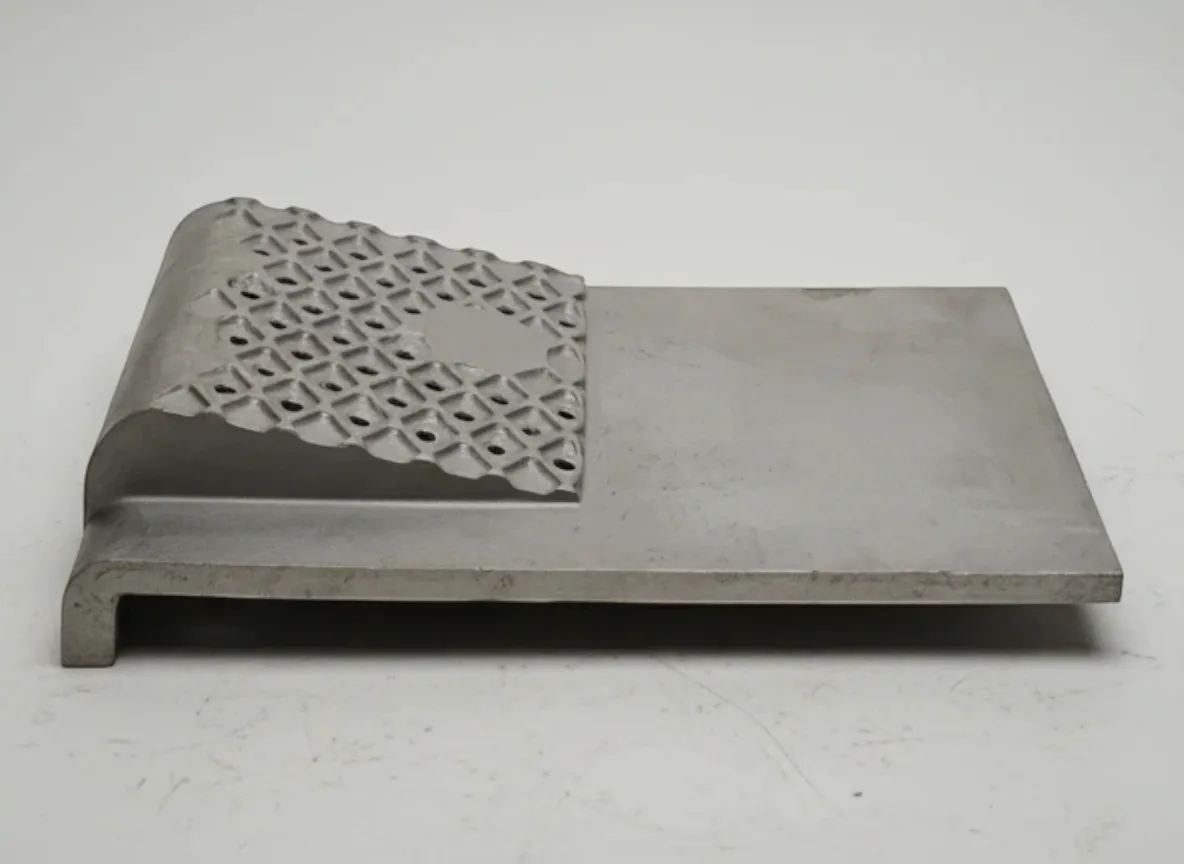
Grate Bars
Discharge grate bars cast from Ni-Hard Type IV (550–650 HB) sized for target clinker product below 25–30 mm. Heat-resistant alloys resist thermal distortion at operating temperature while providing consistent sizing performance. Slot width and bar spacing are matched to crusher model and target product size distribution.
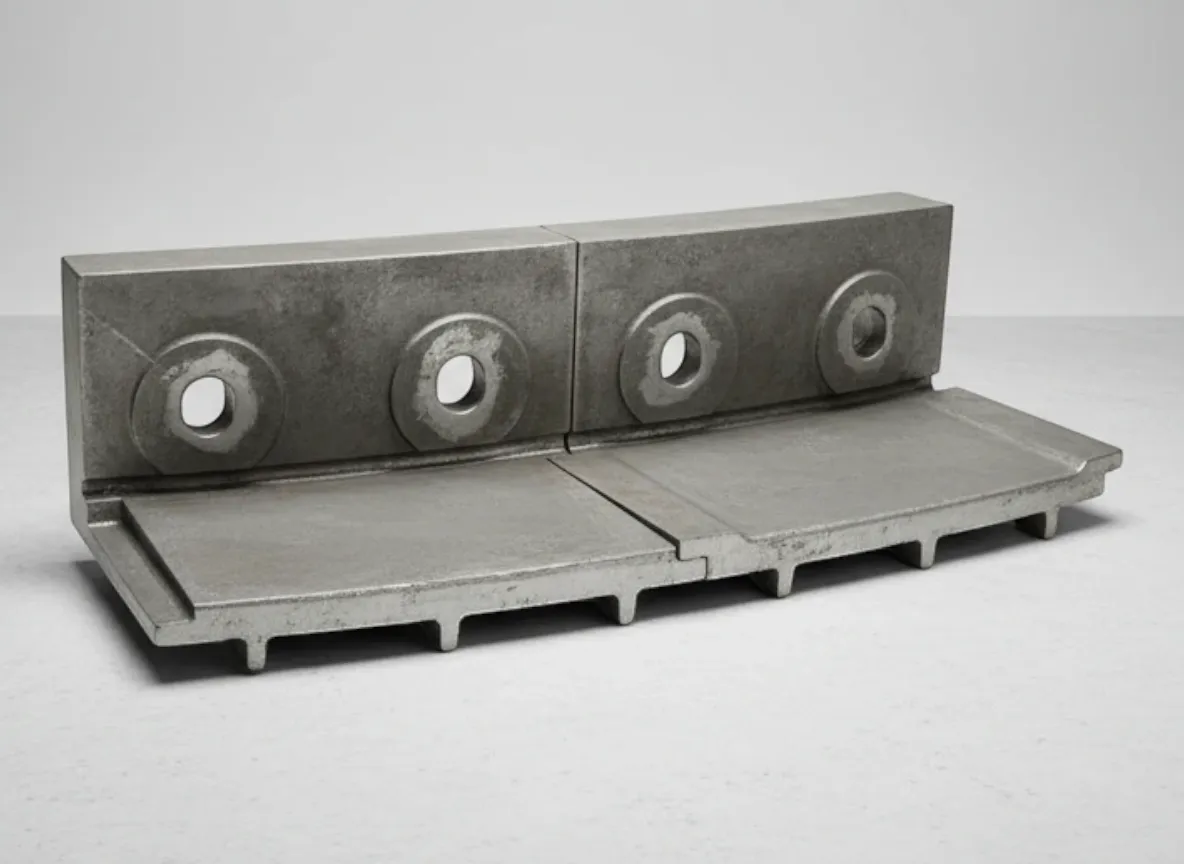
Rotor Discs & Spacers
Rotor assembly components cast from heat-resistant manganese steel that work-hardens to 400+ HB under impact loading. Precision-machined to ensure proper hammer clearance and rotor balance at operating temperature. Thermal expansion at 200–400°C is accounted for in all machined dimensions and clearance tolerances.
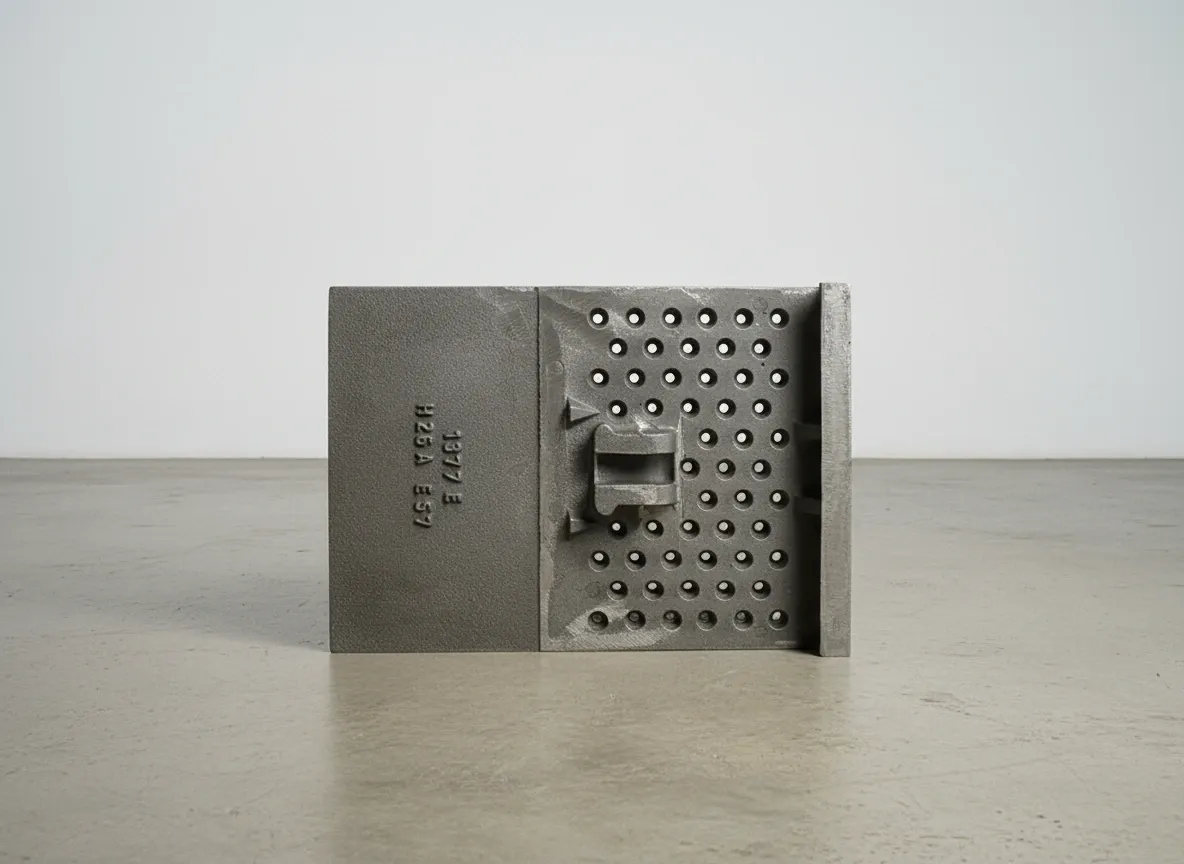
Breaker Plates
Impact surfaces for single-rotor clinker crushers where clinker is thrown by the hammers against stationary breaker plates. Segmented designs allow replacement of individual worn sections without complete plate removal. Cast from high-Cr white iron or Ni-Hard with sufficient toughness to resist fracture under repeated impact loading.
.Df70fKqF_2gfOYX.webp)
Side Liners & Housing Protection
Bolt-in liner segments protecting crusher housing side walls from stray clinker impact and abrasion. Heat-resistant alloys maintain dimensional stability at operating temperature. Liner segments are designed for rapid replacement during scheduled maintenance stops without cutting or welding.
Shaft Seals & Bearing Protection
Thermal barrier and sealing components protecting shaft bearings from clinker heat and dust infiltration. Labyrinth seal designs prevent fine clinker dust from entering bearing housings — dust infiltration is the primary cause of premature bearing failure in clinker crushers. Air-purged seal arrangements available for the most demanding applications.
Heat-Resistant Alloy Selection for Clinker Crushers
Clinker crusher alloy selection is driven by operating temperature, impact severity and whether the component is a primary wear part (hammers) or structural/sizing element (grate bars, rotor discs). The key differentiator from standard crushing is hot hardness — the ability to maintain designed hardness at the actual clinker temperature.
H13 Hot-Work Tool Steel
ASTM A681 (H13 / 1.2344) — 5% Cr, 1.3% Mo, 1% V, 0.4% C
General-purpose clinker crusher hammers at 200–300°C — good balance of hot hardness, toughness and thermal fatigue resistance from secondary hardening by V and Mo carbides
6–12 months (position-dependent)
Limitation: At temperatures above 350°C, hot hardness drops to 45 HRC — consider high-temperature Cr-Mo steel if clinker consistently exceeds 300°C
High-Temperature Cr-Mo Steel
Proprietary high-Cr, high-Mo formulations — 8–12% Cr, 2–3% Mo, V microalloyed
Clinker crusher hammers in higher temperature service (300–400°C) — superior hot hardness retention provides 30–50% longer wear life than H13 in hot applications
8–18 months (temperature-dependent)
Limitation: Lower ambient-temperature toughness than H13 — if clinker temperature is below 250°C, H13 provides better impact resistance for equivalent cost
Bimetallic (Steel + High-Cr WI)
Tough alloy steel body + 28% Cr white iron wear face (60–64 HRC)
Maximum hammer wear life where abrasion dominates over impact — the high-chrome face provides 50–100% longer service than monolithic tool steel hammers in highly abrasive clinker
12–24 months (abrasion-dependent)
Limitation: Lower impact tolerance than monolithic steel — not recommended for very large clinker lumps (>150 mm) or crushers with high rotor tip speed (>30 m/s) where impact fracture risk is elevated
Ni-Hard Type IV
ASTM A532 Class I Type D — 9% Cr, 5% Ni, 3.5% C
Grate bars, breaker plate segments and fixed wear surfaces — excellent abrasion resistance at elevated temperature with adequate toughness for moderate impact loading
12–24 months (grate bar position)
Limitation: Not suitable for primary hammers or high-impact positions — insufficient fracture toughness for repeated direct clinker impact at high velocity
Heat-Resistant Mn Steel
Modified ASTM A128 — 12–14% Mn with Cr and Mo additions for elevated temperature service
Rotor discs, spacers and structural components requiring maximum toughness — work-hardening surface resists impact and abrasion while the tough core absorbs energy without fracture
24–48 months (structural components)
Limitation: Low initial hardness means high early wear rate until work-hardened surface develops — not suitable for purely abrasive applications without impact loading
Hot Hardness Selection Framework
Clinker below 200°C? → Standard H13 hammers provide excellent hot hardness with good toughness at moderate temperatures
Clinker 200–350°C? → H13 adequate but consider high-temp Cr-Mo steel for 30–50% longer hammer life
Clinker 350–400°C? → High-temperature Cr-Mo steel required — H13 drops below 45 HRC at these temperatures
Abrasion-dominated wear? → Bimetallic construction (steel body + 28% Cr white iron face) for maximum wear life
Contact ATF with your cooler discharge temperature, crusher model and current hammer performance data for a specific alloy recommendation with hot hardness curves.
Compatible Crusher Brands & Models
ATF manufactures clinker crusher components for hammer crushers, ring hammer crushers, impact crushers and roll crushers from all major cement equipment suppliers. Parts are manufactured to OEM specifications or custom-designed for upgraded performance.
FLSmidth
EV Hammer Crusher, Cross-Bar Cooler Crushers, ABON Sizers
Including legacy Fuller and F.L.Smidth clinker crusher designs
thyssenkrupp (Polysius)
Single-Shaft Hammer Crushers, Twin-Shaft Impact Crushers
ThyssenKrupp Industrial Solutions — Polysius crusher technology
KHD Humboldt Wedag
RKB Roll Crushers, Hammer Impact Crushers
Including legacy Humboldt Wedag crusher designs
Hazemag
HPI Primary Impactors, SAP Hammer Crushers, Ring Hammer Crushers
Hazemag & EPR — specialist impact crusher technology
CBMI (Sinoma)
Hammer Crushers, Ring Hammer Crushers, Clinker Roll Crushers
Chinese-manufactured cement plant crushers
Others
Metso Outotec NP Series, IKN, Claudius Peters, Fives/FCB
Contact ATF with your crusher model for part compatibility confirmation
Don't see your crusher model? ATF manufactures replacement components from OEM or customer-supplied drawings for any clinker crusher design. Send your crusher model, hammer dimensions and operating temperature for fit confirmation and alloy recommendation.
Verify Your CrusherNeed Clinker Crusher Parts?
Provide your crusher model and clinker discharge temperature. ATF will recommend the optimal alloy for your operating conditions and provide delivery timing aligned to your maintenance schedule.
Clinker Crusher Maintenance Best Practices
Systematic maintenance prevents unplanned downtime and extends component service life. Clinker crusher maintenance focuses on hammer condition monitoring, weight matching, rotation schedules and bearing protection — the critical factors that determine whether you achieve planned or emergency shutdowns.
Every Shift
- Monitor crusher motor current draw — rising current with constant feed rate indicates worn hammers increasing rotor imbalance
- Check crusher discharge product size visually — oversize clinker indicates worn hammers, grate bars or excessive gap
- Listen for abnormal impact noise — irregular heavy impacts suggest broken hammers or loose components
- Monitor crusher bearing temperatures — rising temperature indicates dust seal failure or bearing wear
Weekly
- Inspect hammer wear through inspection doors — measure remaining hammer face thickness at the leading edge
- Check grate bar slot condition — worn or damaged bars allow oversize clinker to pass through
- Verify hammer-to-grate bar clearance is within specification — excessive gap reduces crushing efficiency
- Inspect breaker plate condition (single-rotor designs) — check for cracking, wear patterns or loose segments
Monthly
- Rotate hammers to equalise wear — swap inner/outer and hot-side/cool-side positions for uniform service life
- Weigh hammers and match sets — maintain hammer weight within 2–3% across the rotor to prevent imbalance
- Inspect side liners for wear and replace any segments below minimum thickness
- Check shaft seal condition — replace seals showing clinker dust leakage before dust reaches the bearings
Annual Shutdown
- Complete rotor inspection — check disc condition, keyway wear, shaft run-out and rotor balance
- Replace all hammers as matched weight sets — stagger new and part-worn hammers for consistent crushing
- Replace grate bars and breaker plate segments that have reached minimum thickness
- Inspect and replace side liners, seals and thermal barriers throughout the crusher housing
- Verify crusher alignment relative to cooler discharge — misalignment creates uneven feed distribution and accelerated wear
- Document hammer wear rates by position for trend analysis — optimise rotation schedule and alloy selection based on actual performance data
Clinker Crusher Operating Parameters by Temperature
| Clinker Temp | Hammer Alloy | Expected Hammer Life | Key Concern |
|---|---|---|---|
| <100°C | Standard Mn steel or Cr-Mo | 6–12 months | Abrasion only (no hot hardness needed) |
| 100–200°C | H13 tool steel | 8–12 months | Onset of thermal softening in standard steels |
| 200–350°C | H13 or high-temp Cr-Mo | 6–12 months | Hot hardness critical — standard steels fail |
| 350–400°C | High-temp Cr-Mo or bimetallic | 8–18 months | Maximum hot hardness required |
Hammer life estimates assume normal clinker abrasiveness and proper hammer rotation. Very abrasive clinker (high C₃S, well-crystallised alite) or inadequate rotation will shorten service life. Contact ATF with your specific operating data for refined estimates.
Common Clinker Crusher Problems & Solutions
Clinker crusher issues affect cement plant throughput and clinker handling efficiency. Identifying wear patterns, temperature effects and mechanical problems early allows planned corrective action rather than emergency shutdown.
Rapid Hammer Wear (Much Shorter Than Expected Life)
Probable Causes
- Clinker temperature higher than specified — cooler underperformance delivering clinker at 350–400°C instead of design 200°C, causing thermal softening of hammer alloy
- Incorrect hammer alloy for operating temperature — standard Mn steel or martensitic steel losing 30–50% of hardness above 200°C
- Excessive rotor tip speed generating impact energy beyond what the alloy can resist without spalling
- Very hard clinker from specific raw material chemistry — high C₃S content and well-formed alite crystals are more abrasive than average clinker
Corrective Actions
- Measure actual clinker temperature at crusher inlet using thermocouple or IR pyrometer — compare to design specification
- If temperature exceeds 300°C, upgrade from H13 to high-temperature Cr-Mo steel; if exceeding 250°C, H13 minimum
- Review rotor tip speed — consider reducing speed if impact fracture (spalling) is the dominant wear mechanism
- For very abrasive clinker, consider bimetallic hammers with high-Cr white iron wear faces
Hammer Cracking or Breakage
Probable Causes
- Thermal shock from cold clinker slugs (coating falls, snow-man clinker) impacting hot hammers
- Metallurgical defects in hammer castings — porosity, inclusions or improper heat treatment creating stress risers
- Rotor imbalance from unmatched hammer weights causing cyclic stress concentration at mounting points
- Hammer face hardness too high without adequate core toughness — brittle fracture under impact loading
Corrective Actions
- Install clinker feed distribution system to break up large lumps before crusher inlet — prevent single-point overload
- Specify NDT (ultrasonic or magnetic particle) on replacement hammers to reject castings with internal defects
- Maintain hammer weight matching within 2–3% across the rotor — weigh at every rotation and replacement
- Review alloy specification — ensure toughness (Charpy impact energy ≥15 J at operating temperature) is specified alongside hardness
Uneven Hammer Wear Across the Rotor
Probable Causes
- Off-centre clinker feed — clinker concentrated on one side of the crusher creates localised high-wear zones
- Temperature variation across cooler discharge width — one side delivering hotter clinker that softens hammers faster
- Hammer weight imbalance causing preferential material flow toward heavier hammer positions
- Worn or missing grate bars at specific positions altering local crushing dynamics
Corrective Actions
- Check and adjust clinker feed distribution — ensure centred delivery across the full crusher width
- Rotate hammers between hot-side and cool-side positions at each monthly maintenance rotation
- Maintain matched hammer weights — replace any hammer that deviates more than 3% from the set average
- Replace worn or missing grate bars to restore uniform crushing action across the full rotor width
Oversize Clinker in Crusher Product
Probable Causes
- Worn hammers with reduced face area — insufficient crushing energy transfer to clinker particles
- Excessive hammer-to-grate bar clearance allowing material to pass without adequate size reduction
- Worn or damaged grate bars with enlarged slots passing oversize particles
- Breaker plate worn smooth (single-rotor designs) — clinker rebounds without fracturing
Corrective Actions
- Measure remaining hammer face thickness — replace hammers below minimum threshold
- Adjust hammer-to-grate bar clearance to specification — check at each grate bar replacement
- Inspect and replace grate bars with worn or enlarged slot openings
- Replace worn breaker plate segments — ensure impact surfaces have adequate profile for clinker fracture
Excessive Vibration or Bearing Temperature Rise
Probable Causes
- Rotor imbalance from uneven hammer wear, broken hammers or missing rotor components
- Bearing damage from clinker dust infiltration through failed shaft seals
- Foundation bolt loosening from cumulative vibration — loss of rigid crusher mounting
- Clinker buildup on rotor creating mass imbalance
Corrective Actions
- Immediately check for broken or missing hammers — a single missing hammer creates severe rotor imbalance
- Inspect shaft seals and bearing housing dust covers — replace any showing clinker dust leakage
- Check and re-torque foundation bolts to specification
- Clean clinker buildup from rotor and housing — inspect for the cause of material adhesion (excessive moisture, coating falls)
Frequently Asked Questions
Answers to common questions about clinker crusher hammers, hot hardness alloys, grate bars, maintenance and ordering. Can't find what you're looking for?
Contact Our TeamWhy do standard crusher hammers fail quickly in clinker service?
How do you determine the correct alloy for our clinker temperature?
What are the advantages of bimetallic clinker crusher hammers?
How often should clinker crusher hammers be rotated?
What causes clinker crusher grate bar failure?
Can ATF supply parts for ring hammer crushers as well as standard hammer crushers?
What information does ATF need to quote clinker crusher parts?
What is the typical lead time for clinker crusher parts?
Reliable Clinker Crushing
Heat-resistant wear parts engineered for hot clinker service. ATF provides application-specific alloy recommendations, hot hardness data and full material certification for continuous cement plant operation.
Contact ATF EngineeringFordern Sie Noch Heute ein Kostenloses Angebot An
Unser Ingenieurteam antwortet innerhalb von 24 Stunden mit detaillierten Spezifikationen, Materialempfehlungen und wettbewerbsfähigen Preisen.