

Branchenlösungen
Verschleißteile für Zementwerke | ATF
Verschleißfeste Komponenten für Brechen und Mahlen im Zementwerk. Hochchrom-Auskleidungen, Mangan-Brecherteile und hitzebeständige Ofenkomponenten.
Wear Parts for Cement Plants
Cement plants operate on the tightest maintenance schedules of any crushing and grinding application. With production running 330+ days per year and planned shutdowns measured in hours or days rather than weeks, every wear component must deliver predictable service life that aligns with the maintenance window. Unscheduled downtime in a cement plant cascades through the entire production chain — a raw mill stoppage affects kiln feed, kiln interruptions halt clinker production, and finish mill problems stop cement dispatch. Wear parts are not just components — they are elements of the production schedule.
Material selection in cement applications spans a wider range than any other industry. Raw material crushing uses manganese steel jaw plates and impact crusher components. Raw mills and finish mills use high-chrome white iron liners optimized for grinding efficiency. Clinker handling requires hot-hardness retention at 200-400°C. Kiln and preheater components operate at temperatures above 900°C, requiring heat-resistant austenitic stainless steels (HK40, HP grades). No single alloy system covers all cement plant wear applications — each zone requires materials selected for its specific combination of abrasion, impact, and temperature.
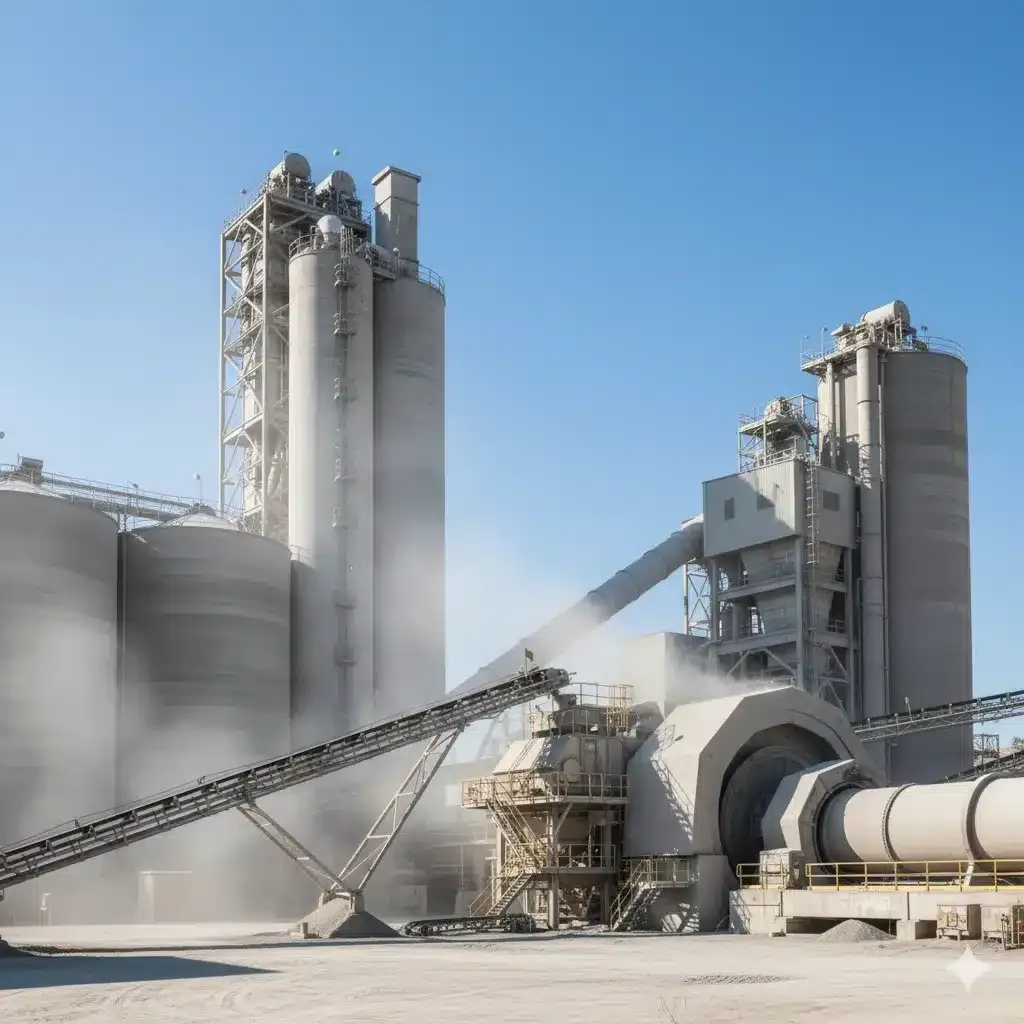
Cement Plant Production Chain
Wear components are required across every stage — from raw material crushing to finish cement grinding
Why Cement Plants Need Different Wear Parts
Cement manufacturing combines the wear challenges of crushing, grinding, and high-temperature processing into a single facility. No other industry requires such a wide range of material systems across its operation. These four factors define cement-specific wear part requirements.
Continuous Production Schedule
Cement plants typically operate 7,800+ hours per year with maintenance windows planned months in advance. Every wear component must deliver service life that reaches the next scheduled shutdown. Components that fail between shutdowns cause cascading production losses across the plant — making predictable wear behavior essential.
Temperature Range
Cement production spans ambient temperature crushing and grinding through clinker handling at 200-400°C to kiln inlet zones above 900°C. Each temperature zone requires different material families. Standard manganese steel is appropriate for crushing and grinding, but clinker handling and kiln components require specialized heat-resistant alloys that retain hardness at operating temperature.
Grinding Efficiency
Grinding consumes the largest share of electrical energy in cement production. Mill liner profiles directly affect grinding efficiency, power draw, and product fineness (Blaine value). Worn liners reduce charge trajectory, decreasing impact grinding and increasing energy consumption per ton. Liner selection and replacement timing are energy management decisions, not just maintenance decisions.
Alternative Raw Materials
Many modern cement plants co-process alternative raw materials and fuels — industrial waste, construction debris, tire-derived fuel, and sewage sludge. These materials introduce contamination and variable chemistry that standard wear solutions may not accommodate. Material selection must account for the full range of feed materials the plant processes.
Material Selection by Plant Area
Cement plants require different material systems for different processing stages. Crushing uses the same manganese grades as quarry and mining applications. Grinding uses high-chrome white iron. High-temperature zones require specialized heat-resistant alloys. Material selection follows the operating temperature and wear mechanism at each position.
| Zerkleinerungsstufe | Typische Ausrüstung | Primäre Verschleißteile | Typischer Werkstoff | Warum |
|---|---|---|---|---|
| Raw material crushing | Jaw crusher, impact crusher | Jaw plates, blow bars, impact plates | Mn18Cr2, martensitic steel | Standard crushing application — limestone, clay, additives |
| Raw mill grinding | Ball mill, VRM | Shell liners, rollers, tables | High-chrome white iron (18-28% Cr) | Abrasion resistance at ambient temperature |
| Coal / fuel grinding | Ball mill, VRM | Shell liners, rollers, tables | High-chrome white iron | Abrasion resistance, explosion-proof design considerations |
| Clinker handling | Clinker breaker, cooler | Breaker hammers, cooler grates | High-chrome, heat-resistant alloys | Hot hardness at 200-400°C clinker temperature |
| Kiln & preheater | Kiln inlet, cyclone | Inlet rings, cyclone liners | HK40 / HP austenitic stainless steel | Oxidation and creep resistance above 900°C |
| Finish cement grinding | Ball mill | Shell liners, diaphragms, grates | High-chrome white iron (18-28% Cr) | Abrasion resistance for Blaine fineness targets |
Raw material crushing
- Ausrüstung
- Jaw crusher, impact crusher
- Verschleißteile
- Jaw plates, blow bars, impact plates
- Werkstoff
- Mn18Cr2, martensitic steel
- Warum
- Standard crushing application — limestone, clay, additives
Raw mill grinding
- Ausrüstung
- Ball mill, VRM
- Verschleißteile
- Shell liners, rollers, tables
- Werkstoff
- High-chrome white iron (18-28% Cr)
- Warum
- Abrasion resistance at ambient temperature
Coal / fuel grinding
- Ausrüstung
- Ball mill, VRM
- Verschleißteile
- Shell liners, rollers, tables
- Werkstoff
- High-chrome white iron
- Warum
- Abrasion resistance, explosion-proof design considerations
Clinker handling
- Ausrüstung
- Clinker breaker, cooler
- Verschleißteile
- Breaker hammers, cooler grates
- Werkstoff
- High-chrome, heat-resistant alloys
- Warum
- Hot hardness at 200-400°C clinker temperature
Kiln & preheater
- Ausrüstung
- Kiln inlet, cyclone
- Verschleißteile
- Inlet rings, cyclone liners
- Werkstoff
- HK40 / HP austenitic stainless steel
- Warum
- Oxidation and creep resistance above 900°C
Finish cement grinding
- Ausrüstung
- Ball mill
- Verschleißteile
- Shell liners, diaphragms, grates
- Werkstoff
- High-chrome white iron (18-28% Cr)
- Warum
- Abrasion resistance for Blaine fineness targets
Note: Material recommendations depend on operating temperature, abrasion intensity, and impact loading at each position. Many cement plants use multiple alloy families across the same piece of equipment. Contact ATF for position-specific recommendations based on your plant configuration.
Cement Plant Equipment by Processing Stage
Cement production uses crushing and grinding equipment from raw material receipt through finish cement grinding. ATF manufactures wear components for each stage. High-temperature kiln and cooler components are available in heat-resistant alloy families.
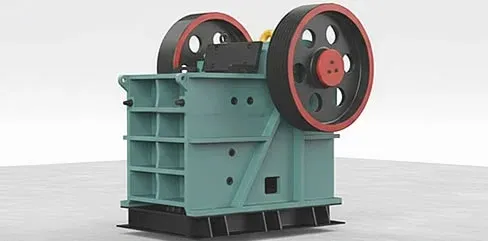
Jaw & Impact Crushers
Raw material size reduction — limestone, clay, marl, and additives. Stationary jaw crushers and impact crushers reduce quarried material to raw mill feed size.
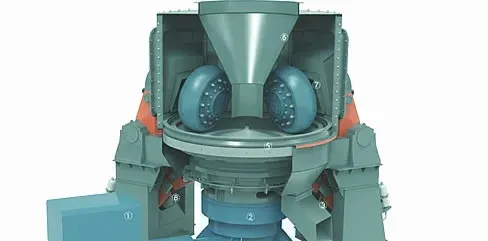
Vertical Roller Mills (VRM)
Raw meal, coal, and slag grinding. Grinding rollers and tables in high-chrome alloys. Increasingly replacing ball mills for raw material and cement grinding in modern plants.
Ball Mills
Raw meal, coal, and finish cement grinding. Shell liners, end liners, diaphragm plates, and discharge grates in high-chrome white iron.
Clinker Crushers & Coolers
Clinker size reduction and cooling. Breaker hammers, cooler grates, and transport components operating at elevated temperatures.
Kiln & Preheater Components
High-temperature wear components for kiln inlet, preheater cyclones, and calciner. HK40 and HP grade heat-resistant castings.
Planning a cement plant shutdown?
Send your equipment list, current liner condition, and shutdown timeline — ATF provides manufacturing schedules aligned to your maintenance window.
E-Mail: info@atfcs.com
Get Cement Plant RecommendationsWear Patterns Common in Cement Plants
Cement plant wear patterns are shaped by continuous operation and the specific combination of abrasion, temperature, and chemical environment at each position. Recognizing these patterns helps determine whether replacement timing is optimal and whether material selection suits the application.
Mill Liner Wear and Power Draw Increase
As ball mill liners wear, the effective internal diameter increases and lifter bar height decreases. This reduces charge trajectory, shifting grinding from efficient impact (cataracting) to less efficient abrasion (cascading). Power draw per ton of product increases. Monitoring specific power consumption helps identify the optimal liner replacement point — before efficiency loss becomes significant.
VRM Roller and Table Wear
Vertical roller mill grinding surfaces wear into concave (roller) and convex (table) profiles that reduce grinding efficiency and increase vibration. Excessive wear increases the gap between roller and table, reducing grinding pressure and product fineness. Most VRM wear surfaces can be rebuilt by weld overlay before requiring replacement casting.
Clinker Cooler Grate Distortion
Cooler grate plates distort and crack under thermal cycling — the combination of high clinker temperature and cooling air creates repeated expansion-contraction stress. Grate distortion reduces cooling efficiency and air distribution. Heat-resistant alloys with thermal cycling tolerance extend grate service life compared to standard cast iron.
Preheater Cyclone Liner Erosion
Cyclone liners in the preheater tower erode from the high-velocity raw meal and gas mixture. Wear is most severe at the cyclone inlet and the cone section where velocity is highest. Erosion patterns indicate whether the wear is normal (uniform) or abnormal (localized, suggesting airflow issues). Refractory-backed cast wear plates and ceramic tile systems are used depending on position severity.
Mill Liner Wear and Power Draw Increase
As ball mill liners wear, the effective internal diameter increases and lifter bar height decreases. This reduces charge trajectory, shifting grinding from efficient impact (cataracting) to less efficient abrasion (cascading). Power draw per ton of product increases. Monitoring specific power consumption helps identify the optimal liner replacement point — before efficiency loss becomes significant.
VRM Roller and Table Wear
Vertical roller mill grinding surfaces wear into concave (roller) and convex (table) profiles that reduce grinding efficiency and increase vibration. Excessive wear increases the gap between roller and table, reducing grinding pressure and product fineness. Most VRM wear surfaces can be rebuilt by weld overlay before requiring replacement casting.
Clinker Cooler Grate Distortion
Cooler grate plates distort and crack under thermal cycling — the combination of high clinker temperature and cooling air creates repeated expansion-contraction stress. Grate distortion reduces cooling efficiency and air distribution. Heat-resistant alloys with thermal cycling tolerance extend grate service life compared to standard cast iron.
Preheater Cyclone Liner Erosion
Cyclone liners in the preheater tower erode from the high-velocity raw meal and gas mixture. Wear is most severe at the cyclone inlet and the cone section where velocity is highest. Erosion patterns indicate whether the wear is normal (uniform) or abnormal (localized, suggesting airflow issues). Refractory-backed cast wear plates and ceramic tile systems are used depending on position severity.
When Is a Material Upgrade Justified in Cement Plants?
In cement manufacturing, the cost of unscheduled downtime typically exceeds the cost of premium wear materials by a wide margin. Material upgrades are justified when they extend component life to reach the next scheduled shutdown — eliminating the risk of mid-campaign failure.
| Aktuelle Situation | Austausch erwägen, wenn | Typischer Austauschpfad |
|---|---|---|
| Standard mill liners not reaching planned shutdown | Components need replacement between scheduled maintenance windows | Standard chrome → higher Cr or Cr-Mo alloy |
| Clinker breaker hammers cracking from thermal cycling | Hammer fracture causing unplanned cooler shutdowns | Standard alloy → heat-resistant grade |
| VRM roller segments wearing before rebuild interval | Roller profile degradation causing vibration and throughput reduction | Standard overlay → harder weld alloy or casting |
| Preheater cyclone liners eroding too fast | Liner replacement requiring unplanned tower entry | Cast liner → ceramic tile system or thicker casting |
| Raw material crusher liners wearing in abrasive feed | Limestone with high silica content causing accelerated wear | Mn13 → Mn18 for crusher liners |
Standard mill liners not reaching planned shutdown
- Austausch erwägen, wenn
- Components need replacement between scheduled maintenance windows
- Austauschpfad
- Standard chrome → higher Cr or Cr-Mo alloy
Clinker breaker hammers cracking from thermal cycling
- Austausch erwägen, wenn
- Hammer fracture causing unplanned cooler shutdowns
- Austauschpfad
- Standard alloy → heat-resistant grade
VRM roller segments wearing before rebuild interval
- Austausch erwägen, wenn
- Roller profile degradation causing vibration and throughput reduction
- Austauschpfad
- Standard overlay → harder weld alloy or casting
Preheater cyclone liners eroding too fast
- Austausch erwägen, wenn
- Liner replacement requiring unplanned tower entry
- Austauschpfad
- Cast liner → ceramic tile system or thicker casting
Raw material crusher liners wearing in abrasive feed
- Austausch erwägen, wenn
- Limestone with high silica content causing accelerated wear
- Austauschpfad
- Mn13 → Mn18 for crusher liners
Note: Most cement plant material upgrades are driven by the need to reach scheduled shutdowns reliably. The economic calculation compares the premium material cost against the production loss from an unscheduled stop — which in cement production is typically substantial.
Cement Plant Wear Parts — Common Questions
Finden Sie Antworten auf häufige Fragen zu Verschleißteilen für diese Anwendung. Nicht gefunden, was Sie suchen?
Unser Team kontaktierenWhy are cement plant maintenance windows so critical for wear part planning?
What materials are used for cement grinding mill liners?
How do operating temperatures affect material selection in cement plants?
Can aftermarket parts align with our shutdown schedule?
What causes VRM vibration and how do worn parts contribute?
Do you supply heat-resistant components for kilns and coolers?
Wear Parts for Cement Manufacturing
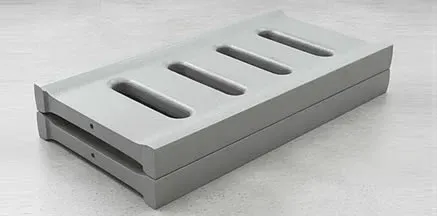
Jaw Crusher Parts
Jaw plates, cheek plates for raw material crushing.
→ View Jaw Crusher Parts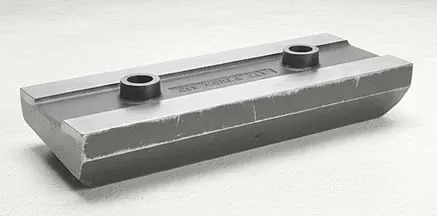
Impact Crusher Parts
Blow bars, impact plates for limestone and additive crushing.
→ View Impact Crusher PartsBall Mill Parts
Shell liners, end liners, lifter bars, grates for raw and finish mills.
→ View Ball Mill PartsVRM Parts
Grinding rollers and tables for vertical roller mills.
→ View VRM PartsCement Plant Parts
Preheater, kiln, cooler, and clinker breaker components.
→ View Cement Plant PartsCement-Grade Wear Parts, Aligned to Your Schedule
Tell us your equipment, shutdown timeline, and current wear challenges. ATF provides materials and delivery schedules matched to your maintenance windows.
Get Cement Plant RecommendationsFordern Sie Noch Heute ein Kostenloses Angebot An
Unser Ingenieurteam antwortet innerhalb von 24 Stunden mit detaillierten Spezifikationen, Materialempfehlungen und wettbewerbsfähigen Preisen.