

Key Specifications
- Chrome Grades
- A05 (Cr27), A07 (Cr27Mo), A49 Hyperchrome
- Chrome Hardness
- 600–700+ BHN
- Rubber Grades
- R55 (55 Shore A), R26 (40 Shore A), U01 Polyurethane (90 Shore A)
- Critical Clearance
- 1–2 mm impeller-to-throatbush gap (pump-size dependent)
- Pump Compatibility
- Warman AH, Metso HM/MD, KSB GIW, ITT Goulds
- Size Range
- 1.5/1 through 20/18 (Warman frame equivalent)
- Sealing
- O-ring grooves, machined mating faces to OEM spec
- Max Temperature
- 70 C (rubber), 120 C (chrome)
Key Features of ATF Throatbush Liners
High-Chrome White Iron
A05/A07 grade chrome iron (Cr27) with 600+ BHN hardness. Erosion-resistant microstructure maintains dimensional stability in the critical impeller clearance zone.
Natural Rubber Construction
Molded natural rubber (R55/R26) bonded to steel backing ring. Resilient surface deflects fine particles and resists erosive wear in fine particle applications.
Precision Bore Dimensions
Suction bore and impeller clearance dimensions held to tight tolerances. Maintains designed pump efficiency and prevents premature recirculation losses.
Wear-Resistant Back Face
Thick material section on back face where recirculating slurry creates concentrated wear. Extended service life in high-recirculation operating conditions.
Machined Sealing Surfaces
O-ring grooves and mating faces machined to specification. Proper sealing prevents slurry leakage between suction cover and throatbush.
Adjustable Clearance Systems
Compatible with OEM impeller adjustment mechanisms. Allows clearance optimization as components wear without replacing parts.
Throatbush Liners: Critical Suction-Side Protection
The throatbush (also called suction liner or suction-side liner) is a precision wear component positioned at the pump suction inlet between the suction cover and the impeller eye. It forms the critical clearance gap—typically 1 to 2 mm depending on pump frame size—with the impeller suction shroud, and this gap is the single most important dimensional parameter controlling internal recirculation and pump hydraulic efficiency. As the throatbush wears and this clearance increases, progressively more slurry recirculates from the high-pressure discharge side back to the suction, reducing effective flow rate, lowering developed head, and increasing power consumption per unit of useful work. ATF manufactures aftermarket throatbush liners from A05 high-chrome white iron (Cr27, 600–650 BHN), A07 Cr27Mo (650–700 BHN) for corrosive-abrasive environments, A49 hyperchrome (700+ BHN) for extreme abrasion, and natural rubber (R55 at 55 Shore A, R26 at 40 Shore A) for fine-particle applications, all held to tight bore tolerances.
In abrasive slurry service, the throatbush experiences severe erosion from high-velocity flow entering the impeller eye at velocities that can exceed 8–15 m/s depending on pump size and flow rate. Particle trajectories concentrate wear at two primary zones: the inlet bore where flow accelerates into the impeller suction eye, and the back face where recirculating slurry leaking through the impeller-to-throatbush gap creates turbulent, high-energy erosion patterns. The back face is particularly vulnerable because recirculation velocity increases as the clearance gap widens, creating a self-accelerating wear mechanism. ATF manufactures aftermarket throatbush liners engineered to OEM specifications for all major slurry pump brands, with critical bore dimensions, back face geometry, O-ring groove locations, and mating surface profiles verified by CMM inspection against original equipment drawings. Proper dimensional accuracy ensures that the designed clearance is achieved on installation, maximising pump efficiency from day one of the service interval.
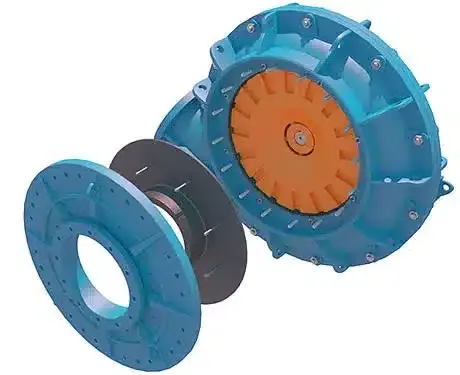
Throatbush liners protect the suction side of the pump casing — available in chrome and rubber for different slurry conditions
OEM Compatibility
ATF manufactures aftermarket throatbush liners for all major slurry pump brands. Critical clearance dimensions are verified against OEM specifications to ensure proper pump performance.
Warman / Weir Minerals
- AH Series (all sizes 1.5/1 through 20/18)
- AHP High Pressure Series
- L Series Light Duty
- M Series Medium Duty
- HH Series Heavy Duty High Head
Metso (Sala/Thomas/Orion)
- HM Series Horizontal
- HR Series
- HS Series Heavy Duty
- MD Mill Discharge Series
KSB GIW
- LSA Series
- LCC Series (M, H variants)
- MDX Mill Duty
- TBC Tailings/Booster
ITT Goulds
- XHD Extra Heavy Duty
- SRL Rubber Lined
- 5500 Series Mining
Flowserve
- Durco Slurry Series
- IDP Slurry
Schurco Slurry
- S Series Standard
- H Series High Head
Need Throatbush Liners for Your Slurry Pumps?
Send your pump model for guaranteed-fit throatbush replacements.
Throatbush Material Options
Throatbush material selection typically matches impeller material since both components experience similar suction-side conditions. The throatbush sees concentrated wear at the bore inlet and back face recirculation zone.
| Material | Hardness | Application | Notes |
|---|---|---|---|
| A05 High-Chrome (Cr27) | 600-650 BHN | Standard grade for coarse slurries, mill discharge, cyclone feed | Match with A05 impellers for consistent wear |
| A07 High-Chrome (Cr27Mo) | 650-700 BHN | Corrosive-abrasive slurries, low pH applications | Molybdenum addition for acidic environments |
| A49 Hyperchrome | 700+ BHN | Ultra-abrasive applications, mineral sands, heavy media | Maximum hardness for extreme erosion |
| R55 Natural Rubber | 55 Shore A | Fine slurries <150 microns, flotation, tailings | Standard rubber grade, 70C max temperature |
| R26 Natural Rubber | 40 Shore A | Ultra-fine slurries, thickener underflow | Softest grade for maximum fine particle resistance |
| U01 Polyurethane | 90 Shore A | Fine abrasive slurries, high-velocity inlets | Excellent cut resistance, limited temperature range |
A05 High-Chrome (Cr27)
A07 High-Chrome (Cr27Mo)
A49 Hyperchrome
R55 Natural Rubber
R26 Natural Rubber
U01 Polyurethane
Note: Throatbush and impeller materials should be matched for optimal wear balance. Consult ATF engineering for recommendations.
Throatbush FAQs
Find answers to common questions about throatbush materials, selection, maintenance, and ordering. Can't find what you're looking for?
Contact Our TeamHow does throatbush wear affect pump performance?
When should I replace the throatbush?
Why do some throatbush designs have an expeller recess?
Should throatbush and impeller be replaced together?
Related Slurry Pump Parts
Technical content reviewed by ATF Engineering Team | Metallurgical specifications verified against ASTM/ISO standards
Get a Quote for Throatbush Liners
Provide your pump model for guaranteed-fit replacement throatbush liners.
Contact ATF Engineering