

Industry Solutions
Aggregate Crusher Parts | Quarry Wear Solutions | ATF
Jaw plates cone liners impact parts for aggregate quarries. Engineered for gradation cubicity & low cost-per-ton. Maximize saleable product.
Wear Parts for Aggregate Production
Aggregate operations face a fundamentally different challenge than mining — product specification compliance is the primary success metric, not just throughput. Gradation curves, cubicity requirements, fines content, and particle shape directly determine whether crushed product meets DOT specifications, ASTM standards, and customer acceptance criteria. Wear parts must deliver consistent crushing performance that produces specification-compliant product throughout their service life — not just process material at maximum tonnage.
Material selection in aggregate applications balances wear life against cost per ton of sellable product. Unlike mining, where premium materials are justified by extended service intervals at remote sites, aggregate operations typically optimize for the lowest total cost of production. Standard manganese grades handle most aggregate applications effectively. Upgrades to higher manganese content or TiC inserts are typically justified only in highly abrasive quartzite, flint gravel, or hard granite operations where standard grades under-perform.
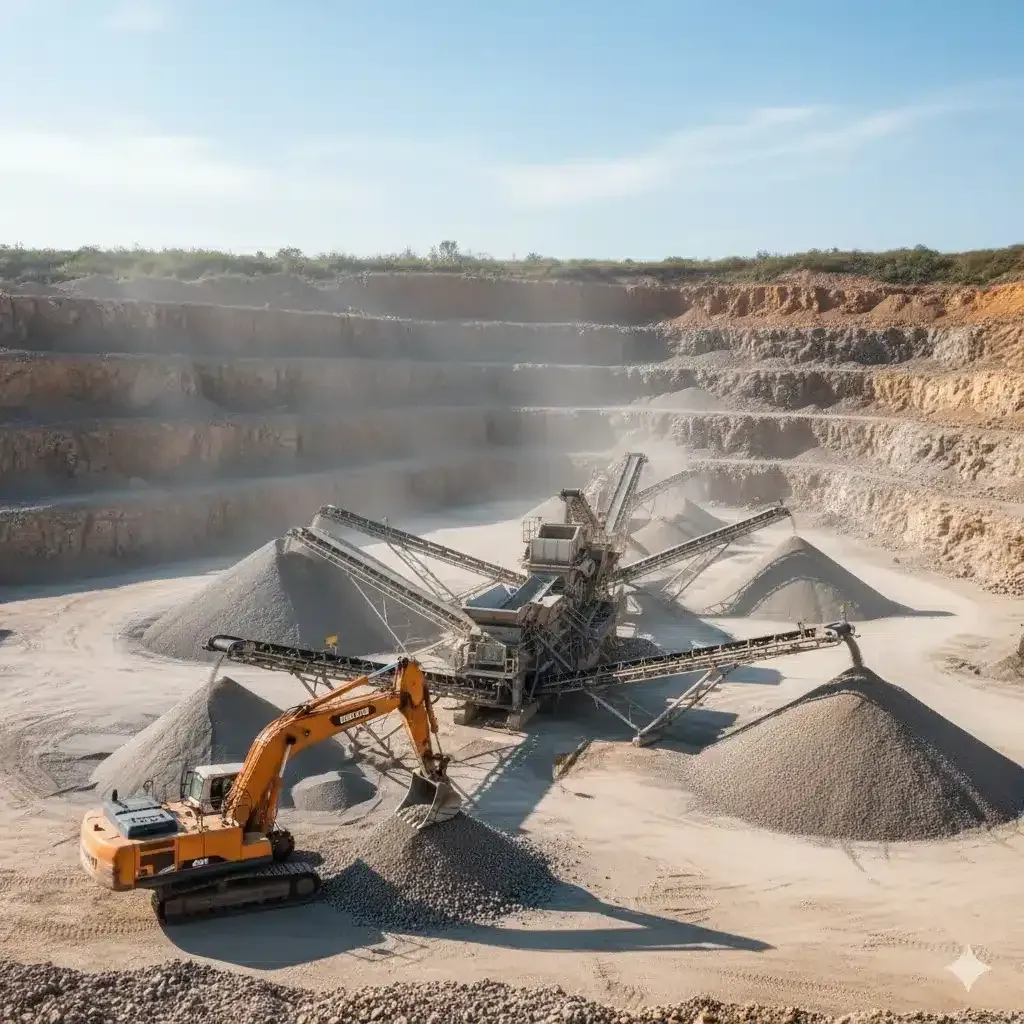
Aggregate Crushing Circuit
Consistent wear part performance maintains product gradation throughout the service interval
Why Aggregate Operations Need Different Wear Parts
Aggregate production is defined by product quality — not just production volume. The wear profile of crusher liners directly affects the gradation and shape of the finished product. As liners wear, crushing chamber geometry changes, which shifts the product size distribution. These four factors define aggregate-specific wear part requirements.
Product Specification Control
Aggregate products must meet precise gradation requirements defined by DOT specifications, ASTM C33, or customer contracts. As crusher liners wear, the effective CSS changes, shifting the product curve. Wear parts that maintain consistent geometry longer produce specification-compliant product for more hours before adjustment or replacement is required.
Variable Rock Types
Many quarries process multiple rock types — limestone from one face, granite from another, and river gravel from a separate pit. A single set of wear parts must handle varying hardness and abrasiveness without premature failure on the hardest material or excessive cost on the softest.
Seasonal and Mobile Operations
Aggregate production is seasonal in many regions, with mobile plants moving between pit locations. Equipment operates 2,500-4,000 hours per year — less than mining, but with more frequent setup changes. Wear parts need to be versatile across different feed materials encountered at different sites.
Cost-Per-Ton Economics
Aggregate is a commodity product — pricing is competitive and margins depend on production cost control. Wear part economics are evaluated on cost per ton of sellable product, not just cost per component. The lowest-cost part is not always the most economical if it produces off-spec product or requires frequent change-outs during production hours.
Material Selection by Application Type
Aggregate operations use compression crushers (jaw, cone) for gradation control and impact crushers (HSI, VSI) for product shape. Material selection depends on the rock type and the product requirement — not just the equipment model.
| Crushing Stage | Typical Equipment | Primary Wear Parts | Typical Material | Why |
|---|---|---|---|---|
| Primary reduction | Jaw crusher (C96-C125) | Fixed jaw, swing jaw, cheek plates | Mn13Cr2, Mn18Cr2 | Moderate impact, cost-effective for most quarry rock |
| Secondary / tertiary | Cone (HP300-HP500, GP) | Mantles, concaves | Mn18Cr2 | Consistent wear pattern maintains CSS and gradation |
| Product shaping (HSI) | Impact (NP series, CI) | Blow bars, impact plates | Martensitic, high-chrome | Shape improvement for asphalt and concrete aggregate |
| Manufactured sand (VSI) | VSI (Barmac, CV) | Rotor tips, wear plates | Ceramic MMC, high-chrome | Extreme abrasion in rock-on-rock autogenous crushing |
| Recycled aggregate | Impact (mobile NP, QI) | Blow bars, impact plates | Martensitic | Impact toughness for rebar-contaminated concrete |
Primary reduction
- Equipment
- Jaw crusher (C96-C125)
- Wear Parts
- Fixed jaw, swing jaw, cheek plates
- Material
- Mn13Cr2, Mn18Cr2
- Why
- Moderate impact, cost-effective for most quarry rock
Secondary / tertiary
- Equipment
- Cone (HP300-HP500, GP)
- Wear Parts
- Mantles, concaves
- Material
- Mn18Cr2
- Why
- Consistent wear pattern maintains CSS and gradation
Product shaping (HSI)
- Equipment
- Impact (NP series, CI)
- Wear Parts
- Blow bars, impact plates
- Material
- Martensitic, high-chrome
- Why
- Shape improvement for asphalt and concrete aggregate
Manufactured sand (VSI)
- Equipment
- VSI (Barmac, CV)
- Wear Parts
- Rotor tips, wear plates
- Material
- Ceramic MMC, high-chrome
- Why
- Extreme abrasion in rock-on-rock autogenous crushing
Recycled aggregate
- Equipment
- Impact (mobile NP, QI)
- Wear Parts
- Blow bars, impact plates
- Material
- Martensitic
- Why
- Impact toughness for rebar-contaminated concrete
Note: Mn18Cr2 is the most common starting point for aggregate applications. Mn13 is cost-effective for soft limestone. Mn22 is typically justified only for highly abrasive quartzite or flint gravel. Contact ATF for recommendations based on your specific rock type and product requirements.
Aggregate Crushing and Screening Equipment
Aggregate plants configure crushing circuits based on the product mix — road base, concrete aggregate, asphalt stone, manufactured sand. Each product requires different crushing stages and equipment. ATF manufactures wear components for each stage.
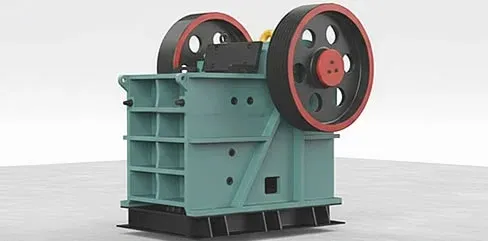
Jaw Crushers
Primary quarry face reduction for all rock types. Stationary and mobile jaw crushers (C96, C106, C116, QJ341, Premiertrak) reduce quarry face material to secondary crusher feed size.
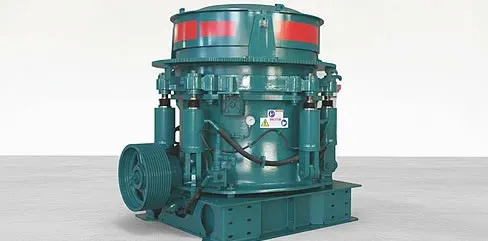
Cone Crushers
Secondary and tertiary size reduction for precise gradation control. HP, GP, CH, CS, and Symons series crushers produce specification-compliant aggregate with consistent CSS management.
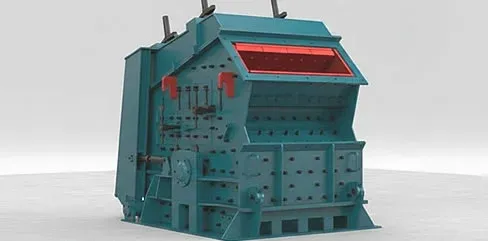
HSI Impact Crushers
Product shaping and recycled concrete processing. HSI crushers (NP series, CI series, QI, Trakpactor) produce cubical aggregate for asphalt and concrete applications.
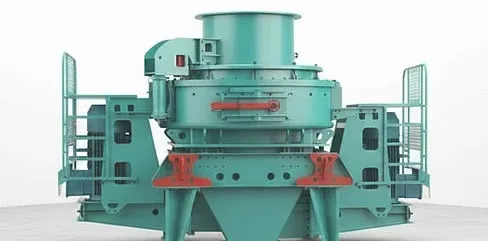
VSI Crushers
Manufactured sand and final shaping. Barmac and CV series crushers produce engineered sand meeting ASTM C33 gradation requirements for concrete production.
Need consistent product quality from your wear parts?
Send your quarry rock type, target product specifications, and current equipment — ATF recommends materials matched to your aggregate application.
Email: info@atfcs.com
Get Aggregate RecommendationsWear Patterns That Affect Product Quality
In aggregate operations, wear patterns matter because they directly affect the finished product. Unlike mining where total throughput is the priority, aggregate producers need to monitor how liner wear changes the crushing chamber and product gradation.
CSS Drift from Liner Wear
As cone crusher liners wear, the CSS increases, shifting the product gradation coarser. If not compensated by adjusting the mantle position, the product curve drifts out of specification. Regular CSS checks and mantle adjustment extend the period of specification-compliant production.
Uneven Jaw Plate Wear
One jaw plate wearing faster than the other, creating a tapered gap. Most common in jaw crushers with asymmetric feed distribution or excessive one-side loading from the feed arrangement. Results in inconsistent product sizing across the discharge width.
Blow Bar Edge Rounding in HSI Crushers
Impact crusher blow bars lose sharp edge geometry, reducing impact energy transfer and shifting product shape from cubical toward flaky. Product shape degradation often becomes apparent before the blow bar reaches minimum weight — monitoring cubicity helps determine optimal rotation and replacement timing.
VSI Rotor Tip Erosion
Rotor tip wear in VSI crushers changes the acceleration trajectory of rock-on-rock impact, affecting manufactured sand gradation and fines content. Worn tips produce coarser product and more fines — both quality issues for concrete sand production.
CSS Drift from Liner Wear
As cone crusher liners wear, the CSS increases, shifting the product gradation coarser. If not compensated by adjusting the mantle position, the product curve drifts out of specification. Regular CSS checks and mantle adjustment extend the period of specification-compliant production.
Uneven Jaw Plate Wear
One jaw plate wearing faster than the other, creating a tapered gap. Most common in jaw crushers with asymmetric feed distribution or excessive one-side loading from the feed arrangement. Results in inconsistent product sizing across the discharge width.
Blow Bar Edge Rounding in HSI Crushers
Impact crusher blow bars lose sharp edge geometry, reducing impact energy transfer and shifting product shape from cubical toward flaky. Product shape degradation often becomes apparent before the blow bar reaches minimum weight — monitoring cubicity helps determine optimal rotation and replacement timing.
VSI Rotor Tip Erosion
Rotor tip wear in VSI crushers changes the acceleration trajectory of rock-on-rock impact, affecting manufactured sand gradation and fines content. Worn tips produce coarser product and more fines — both quality issues for concrete sand production.
When Is a Material Upgrade Justified in Aggregates?
Aggregate operations are cost-sensitive — upgrading materials must deliver a clear return through extended service intervals, reduced change-out frequency, or longer periods of specification-compliant production. The decision framework differs from mining because aggregate margins are tighter and the primary concern is product quality, not just wear life.
| Current Situation | Consider Upgrading When | Typical Upgrade Path |
|---|---|---|
| Mn13 cone liners in hard granite quarry | Liners wearing to minimum before scheduled end-of-season shutdown | Mn13 → Mn18 |
| Standard martensitic blow bars in abrasive limestone | Bars not lasting a full production week | Martensitic → high-chrome (if clean feed) |
| Mn18 jaw plates in quartzite or flint gravel | Edge rounding causing product gradation drift within days | Mn18 → Mn22 or Mn18+TiC |
| High-chrome VSI tips in abrasive sand production | Tips wearing below functional geometry too quickly | High-chrome → ceramic MMC |
| Any component where change-out interrupts production | Change-out frequency exceeds what the production schedule can absorb | Evaluate next-grade economics |
Mn13 cone liners in hard granite quarry
- Consider Upgrading When
- Liners wearing to minimum before scheduled end-of-season shutdown
- Upgrade Path
- Mn13 → Mn18
Standard martensitic blow bars in abrasive limestone
- Consider Upgrading When
- Bars not lasting a full production week
- Upgrade Path
- Martensitic → high-chrome (if clean feed)
Mn18 jaw plates in quartzite or flint gravel
- Consider Upgrading When
- Edge rounding causing product gradation drift within days
- Upgrade Path
- Mn18 → Mn22 or Mn18+TiC
High-chrome VSI tips in abrasive sand production
- Consider Upgrading When
- Tips wearing below functional geometry too quickly
- Upgrade Path
- High-chrome → ceramic MMC
Any component where change-out interrupts production
- Consider Upgrading When
- Change-out frequency exceeds what the production schedule can absorb
- Upgrade Path
- Evaluate next-grade economics
Note: For many aggregate applications, Mn18Cr2 is the optimal balance of wear life and cost. Not every quarry benefits from premium grades — soft limestone operations rarely justify upgrades beyond Mn13.
Aggregate Wear Parts — Common Questions
Find answers to common questions about wear parts for this application. Can't find what you're looking for?
Contact Our TeamWhy does product gradation change as cone crusher liners wear?
What manganese grade works for most quarry applications?
How do I choose between martensitic and high-chrome blow bars?
Can aftermarket parts maintain the same product quality as OEM?
How often should I check CSS on my cone crusher?
What wear parts does a manufactured sand VSI require?
Wear Parts for Aggregate Production
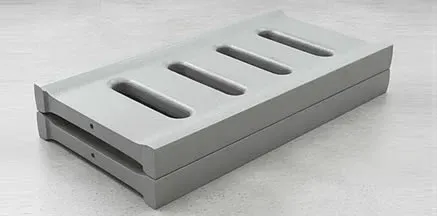
Jaw Crusher Parts
Jaw plates, cheek plates, toggle plates for primary quarry reduction.
→ View Jaw Crusher Parts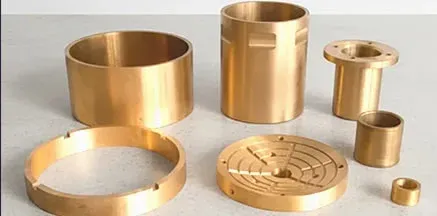
Cone Crusher Parts
Mantles, concaves, feed cones for secondary and tertiary sizing.
→ View Cone Crusher Parts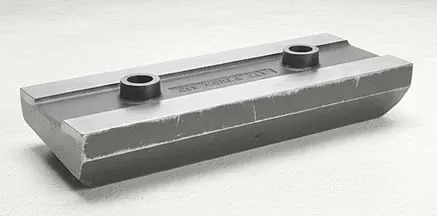
Impact Crusher Parts
Blow bars, impact plates, side liners for HSI product shaping.
→ View Impact Crusher Parts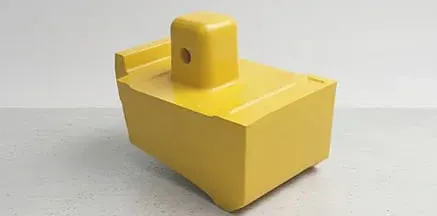
VSI Crusher Parts
Rotor tips, wear plates for manufactured sand and final shaping.
→ View VSI Crusher PartsAggregate-Grade Wear Parts, Factory Direct
Tell us your rock type, target product, and equipment. ATF recommends materials that protect your product quality and production economics.
Get Aggregate RecommendationsRequest a Free Quote Today
Our engineering team responds within 24 hours with detailed specifications, material recommendations, and competitive pricing.