

Peças para Britador Cônico
Revestimentos para Britador Cônico | Mantos e Bacias | ATF
Mantos e revestimentos da bacia para britadores cônicos em aço manganês Mn14-Mn22. Geometria de perfil e classe conforme cavidade e serviço.
What Cone Liners Do and Why Material Matters
Cone crusher liners — mantles and concaves, also called bowl liners or concave segments — are the primary wear components in cone crushers. The mantle (inner moving cone) gyrates inside the concave (outer stationary ring), crushing material through high compressive forces generated by the gyrating mantle. The combination of compressive force, feed abrasiveness and operating profile determines how quickly liners wear — and which manganese grade will perform best in a given application.
Material selection is the single largest factor in cone liner wear life. Higher manganese content increases work-hardening potential and toughness but costs more per liner. Lower manganese content is cost-effective in softer rock but under-performs in hard, abrasive feeds. ATF manufactures cone liners in three austenitic manganese steel grades — Mn13, Mn18 and Mn22 — each available with TiC (titanium carbide) insert upgrades for extended wear life in abrasive applications with controlled feed.
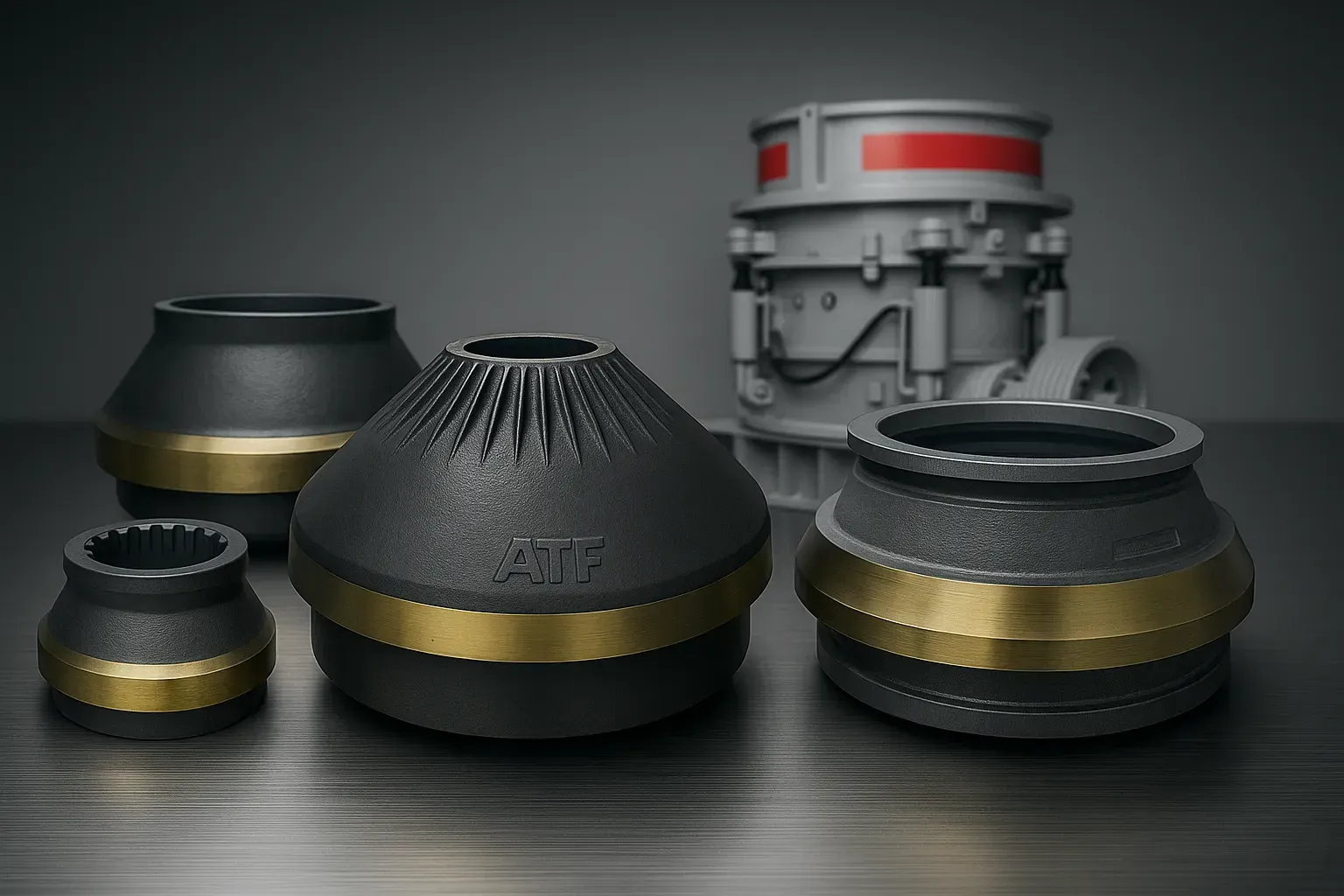
Cone Liner Crushing Chamber
Material is crushed by compression between mantle and concave surfaces
Material Selection by Application
Four cone liner options covering every application from soft limestone secondary crushing to severe-duty mining with TiC-reinforced edge retention.
| Material | Hardness | Impact Tolerance | Application |
|---|---|---|---|
| Mn13Cr2 Manganese | 200–240 HB (work-hardens to 450–500) | High | General-purpose secondary, limestone, variable loading |
| Mn18Cr2 Manganese | 210–240 HB (work-hardens to 500–550) | High | Hard rock secondary/tertiary, granite, basalt — industry standard |
| Mn22Cr3 Manganese | 220–250 HB (work-hardens to 550–580) | Very High | Coarse chambers, mining, severe shock, tramp metal risk |
| Mn + TiC Composite | Mn base + 3200 HV TiC inserts | High | Abrasive feeds with edge rounding, tertiary/fine with metal detection |
Mn13Cr2 — General Purpose
Mn13Cr2 Manganese
- Hardness: 200–240 HB (work-hardens to 450–500)
- Impact: High
- Application: General-purpose secondary, limestone, variable loading
Mn18Cr2 — Industry Standard
Mn18Cr2 Manganese
- Hardness: 210–240 HB (work-hardens to 500–550)
- Impact: High
- Application: Hard rock secondary/tertiary, granite, basalt — industry standard
Mn22Cr3 — Maximum Toughness
Mn22Cr3 Manganese
- Hardness: 220–250 HB (work-hardens to 550–580)
- Impact: Very High
- Application: Coarse chambers, mining, severe shock, tramp metal risk
Mn + TiC Composite
Mn + TiC Composite
- Hardness: Mn base + 3200 HV TiC inserts
- Impact: High
- Application: Abrasive feeds with edge rounding, tertiary/fine with metal detection
Note: Impact tolerance ratings are qualitative and reflect relative performance across these manganese grades. All grades are austenitic manganese steel — they work-harden under compression, increasing surface hardness from approximately 200 HB to 450–580 HB during operation. Higher manganese content increases both work-hardening potential and toughness. Contact ATF for test data specific to your application.
Work-Hardening Response by Manganese Grade
Base manganese grade positions on the hardness-toughness spectrum. Higher manganese content increases both work-hardened surface hardness and toughness. TiC inserts (arrow) add localised edge hardness of 3200 HV. The manganese matrix retains its general compression toughness, though insert zones may alter local crack initiation behaviour under severe point-load impact. All hardness values shown as work-hardened HB — as-cast hardness is 200–250 HB for all grades.
Feed Preparation for TiC Composite Cone Liners
TiC cone liners require functioning magnetic separation and metal detection upstream of the crusher. TiC inserts fracture under point-load impact from tramp iron, loader teeth or undetected steel contamination. Verify your feed preparation before specifying TiC composite variants.
If upstream metal removal cannot be ensured, use the appropriate plain manganese grade instead — Mn18 for most secondary/tertiary duties, Mn22 for coarse chambers and mining with shock risk, or Mn13 for soft rock with variable loading.
How to Choose: Manganese Grade First, Then TiC Upgrade
Cone liner selection follows two steps. First, identify the correct manganese grade for the application's feed hardness, impact intensity and operational profile. Second, decide whether TiC inserts are justified by the feed abrasiveness and required service interval.
1 Step 1 — Manganese Grade by Application
Mn13Cr2 Manganese
General purpose, variable loading, softer rock
Work-hardens under moderate impact (200 → 450–500 HB). Cost-effective for limestone, dolomite and intermittent operations where loading intensity varies.
Mn18Cr2 Manganese
Hard rock secondary/tertiary, consistent choke feed
Optimal work-hardening response for most cone crusher applications (200 → 500–550 HB). The default starting point for granite, basalt and hard rock.
Mn22Cr3 Manganese
Maximum toughness, coarse chambers, mining with shock risk
Highest toughness to resist cracking under shock loading (200 → 550–580 HB). Justified in coarse EC/C chambers with large feed and mining applications.
Mn + TiC Composite
Abrasive feeds, tertiary/fine crushing, tight CSS
TiC rods (3200 HV) at high-wear zones slow edge erosion while the manganese matrix carries compression loads. Requires functioning metal detection upstream.
Not sure which manganese grade fits your cone crusher?
Send your crusher model and feed material — ATF recommends the right grade within 24 hours.
2 Step 2 — TiC Insert Upgrade
TiC rods (3200 HV) reinforce the crushing edge against abrasive wear. They extend service life in abrasive applications but add cost and require clean feed to prevent insert damage from tramp metal. The more abrasive and consistent the feed, the more a TiC upgrade is justified.
| Base Grade | Upgrade Available | When to Upgrade | When Not To |
|---|---|---|---|
| Mn13Cr2 | + TiC (3200 HV rods) | Abrasive soft rock where Mn13 edge retention limits life | Low-abrasion limestone — cost not justified |
| Mn18Cr2 | + TiC (3200 HV rods) | Granite/basalt tertiary with tight CSS where edge rounds too fast | Coarse secondary — toughness matters more than edge retention |
| Mn22Cr3 | + TiC (3200 HV rods) | Abrasive mining feeds with functioning tramp control | Frequent uncontrolled shock — TiC spalling risk outweighs benefit |
TiC suitability rule: TiC is typically justified when edge rounding — not thickness wear — is the primary factor limiting liner life. This is most common in tertiary and fine crushing (F/EF chambers) with abrasive feeds and tight CSS (6–19 mm). If tramp metal cannot be reliably controlled, standard manganese delivers better economics.
Lead Times by Material Type
| Material | Typical Lead Time | Why |
|---|---|---|
| Mn13Cr2 Manganese (plain) | 4–6 weeks | Standard production, common sizes often available from stock |
| Mn18Cr2 Manganese (plain) | 4–6 weeks | Highest-volume production, popular models held in stock |
| Mn22Cr3 Manganese (plain) | 5–7 weeks | Lower volume production, typically made to order |
| Mn + TiC Composite (any base) | 7–9 weeks | TiC rod placement requires secondary casting process + extended QC |
Lead times vary by liner size (weight class), chamber configuration, order quantity and current production schedule. Cone liners are significantly heavier than blow bars — casting, heat treatment and machining cycles are longer. If you are planning a scheduled shutdown, contact ATF early — particularly for TiC composite variants and large-diameter liners (HP500/HP800, CH660, 7′ Symons). Mn18 mantles and concaves for Metso HP200, HP300, HP400 and Sandvik CH430, CH440 in popular chamber configurations are typically available from stock. Lead times shown are typical manufacturing durations — confirm availability and schedule at order placement.
Planning a shutdown?
Check lead time and stock availability for your specific cone liner model and chamber configuration.
Manganese Steel Cone Liners — Work-Hardening Science
Austenitic manganese steel is the standard material for cone crusher liners because it work-hardens under compression — the exact loading mechanism in cone crushers. Repeated compression cycles cause strain-induced transformation and microstructural refinement at the liner surface, increasing hardness from 200–240 HB to 450–580 HB depending on manganese content. The subsurface remains austenitic — tough and ductile — creating a hard outer shell supported by a crack-resistant core that renews as the liner wears.
Work-hardening requires sufficient compression loading to activate. In cone crushers, this means maintaining choke feed — the chamber should be approximately 60–80% full as a general target. Starved feed prevents the austenite-to-martensite transformation, causing the surface to remain soft and smooth — a condition known as glazing. A glazed liner wears significantly faster because the soft surface has minimal abrasion resistance. If loading intensity is insufficient to activate work-hardening, the solution is operational (increase feed rate) — not metallurgical (upgrading the grade will not fix starved feeding).
Mn13 — General-Purpose Manganese (Mn13Cr2)
Mn13Cr2 manganese steel (ASTM A128 Grade B-3 equivalent) is the cost-effective choice for general-purpose secondary crushing and softer rock types. The 11–14% manganese content provides adequate work-hardening under moderate compression, with the chromium addition improving initial wear resistance. Mn13 delivers the lowest cost per liner while still providing the work-hardening behaviour that makes manganese steel effective in cone crushers.
Best Applications
Limestone, dolomite, soft to medium-hard aggregates, variable loading conditions, intermittent operations.
Limitation
In hard, abrasive rock (granite, basalt, quartzite), Mn13 underperforms Mn18 in both edge retention and work-hardened hardness. The cost saving per liner is typically offset by shorter service life in these conditions.
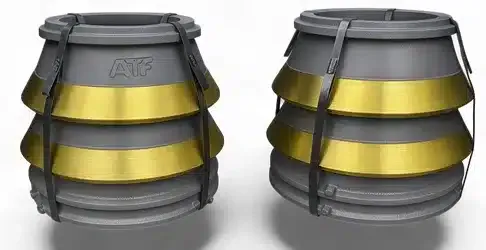
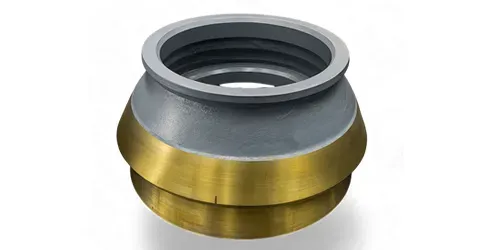
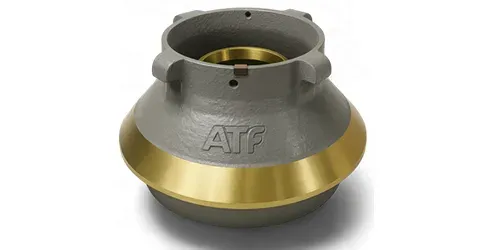
Mn18 + TiC Composite
Titanium carbide rods at 3200 HV
Mn18 — Hard Rock Standard (Mn18Cr2)
Mn18Cr2 manganese steel (ASTM A128 Grade C equivalent) is the industry standard for cone crusher liners processing hard rock. The 17–19% manganese content delivers optimal work-hardening response — surface hardness reaches 500–550 HB under consistent choke feeding. This is the grade most cone crushers worldwide run on, and the correct starting point for material selection in the majority of secondary and tertiary applications.
Best Applications
Granite, basalt, hard limestone, gneiss, general aggregates production, secondary and tertiary crushing.
Limitation
If shock events (tramp metal, oversized feed) are frequent and cause liner cracking, upgrade to Mn22. If abrasive edge rounding limits life before thickness wear becomes critical, consider TiC inserts.
Cone Liner Gallery
Manganese steel mantles and concaves manufactured to OEM specifications for all major cone crusher brands.
-
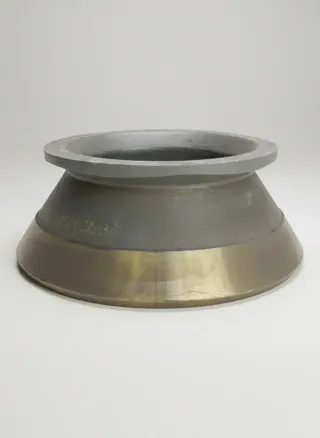
Mn18Cr2 Manganese Cone Mantles
-
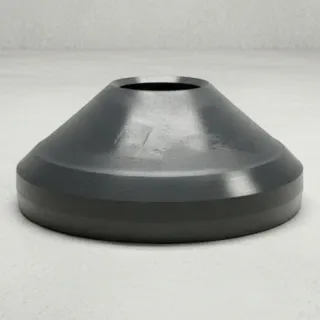
TiC Insert Mn18 + TiC Composite Mantle
-
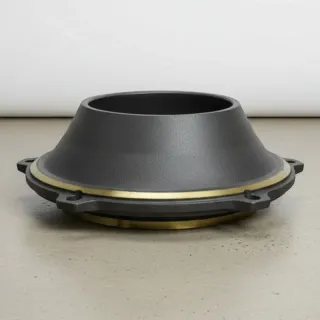
Concaves Bowl Liner / Concave Set
-
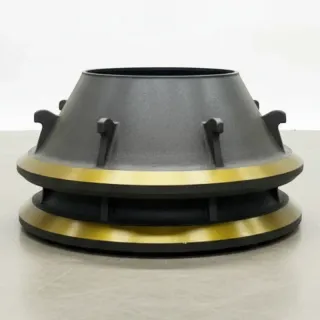
CNC Machined Precision Machined Mantle
-
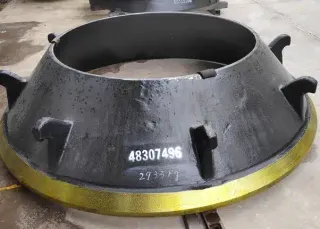
Casting Manganese Steel Casting
-
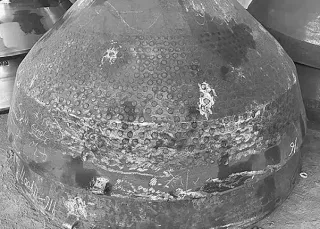
Heat Treatment Water Toughening Process
-
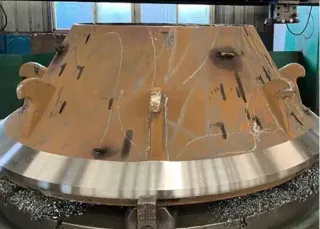
Mn22Cr3 Mn22 Severe-Duty Liner
-
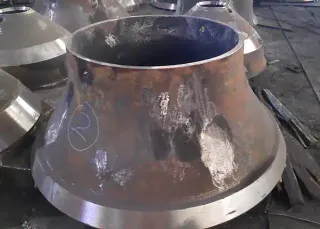
Export Ready Export Packaging & Shipping
Mn22 — Maximum Toughness (Mn22Cr3)
Mn22Cr3 manganese steel provides maximum toughness for severe-duty cone crushing. The 20–24% manganese content enhances both work-hardening response (550–580 HB) and ductility, making Mn22 the correct choice where cracking risk exceeds abrasive wear as the primary failure mode. The additional cost over Mn18 is justified only in genuinely severe-duty applications — coarse chambers (EC/C) with large feed, mining circuits with tough ore, and operations with occasional tramp metal events.
Best Applications
Coarse EC/C chambers, mining (iron ore, copper ore, tough rock), circuits with tramp metal risk, primary cone crushing.
Limitation
In low-abrasion, low-impact applications (limestone, soft aggregates), Mn22 costs more than Mn18 with negligible performance benefit. The additional manganese provides no advantage where loading intensity is already sufficient for Mn18 to work-harden fully.
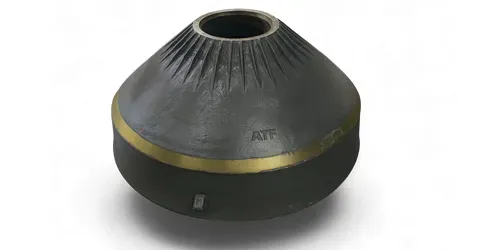
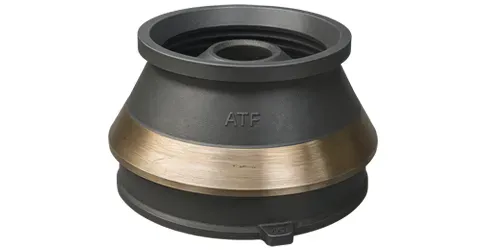
TiC Insert Detail
Titanium carbide rods at 3200 HV in high-wear zones
Mn + TiC Composite — Extended Edge Retention
When plain manganese wears too quickly due to abrasive edge rounding, TiC (titanium carbide) rods embedded at high-wear strike zones provide localised hardness of 3200 HV. The manganese base retains high impact tolerance while the TiC rods resist edge erosion in abrasive feeds. This composite is positioned between plain manganese and more aggressive feed-control requirements: it extends service intervals in appropriate applications compared to plain manganese, but requires functioning metal detection upstream to protect the inserts.
Best Applications
Tertiary/fine crushing with tight CSS (6–19 mm), abrasive feeds (granite, quartzite), manufactured sand production.
Critical Limitation
TiC inserts fracture under point-load impact from tramp metal. Without reliable upstream metal detection, standard Mn18 or Mn22 provides better economics and lower risk. See "When NOT to Use TiC" below.
When NOT to Use TiC in Cone Crushers
-
Uncontrolled tramp metal
Steel impacts cause TiC spalling — the cost premium is wasted if tramp metal reaches the crusher regularly.
-
Recycling without metal detection
Rebar and embedded steel destroy TiC inserts rapidly. Standard Mn18 or Mn22 provides better economics.
-
Coarse/EC chambers
Edge retention is less critical than overall toughness. Mn22 delivers better value than TiC for EC and C chamber applications.
-
Low-abrasion materials
Limestone, soft rock, low-silica feeds — TiC cost premium is not justified by proportional wear improvement.
Not Sure Which Manganese Grade Is Right?
Our application engineers provide free technical consultations. Tell us your crusher model, feed material and current wear patterns — we'll recommend the optimal cone liner material for your operation.
Maximize Liner Life
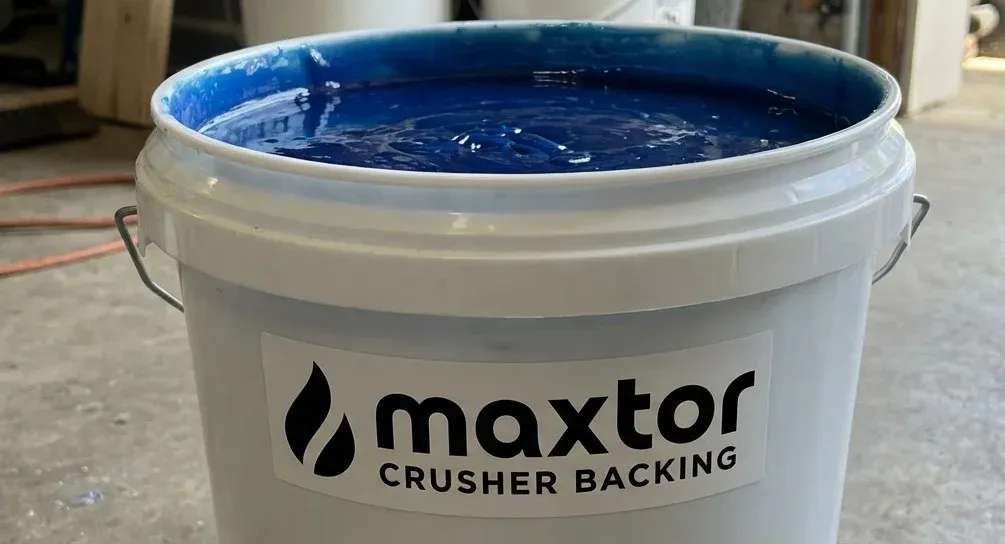
ATF Maxtor Crusher Backing Compound
100% solid epoxy backing compound eliminates gaps between cone liners and the crusher body. Proper backing absorbs vibration, prevents liner cracking from point loading, and extends wear part service life by ensuring full contact across the liner surface.
Cone Liner Replacement and Wear Management
When to Replace Cone Crusher Liners
| Wear Stage | Indicator | Action |
|---|---|---|
| 0–300 hours | 1–2 mm CSS drift — normal wear-in | Monitor weekly, maintain choke feed for work-hardening |
| 300–600 hours | 2–4 mm CSS drift — moderate wear | Adjust CSS to maintain product spec |
| 600–900 hours | 4–6 mm CSS drift — approaching end of life | Plan liner change, order replacement set |
| 70% worn | Throughput drops 10–15% at same settings | Replace mantle — concave may have 1–2 more campaigns |
| Visible cracks | Any crack exceeding 10 mm | Immediate shutdown — risk of catastrophic failure |
| Glazing | Smooth, shiny surface with low hardness | Plan replacement at next shutdown |
Replace Mantle and Concave Together
For optimal crushing performance and chamber geometry, always replace the mantle and concave (bowl liner) together as a matched set. This ensures correct liner profiles, consistent CSS control, and even wear development across both surfaces.
Best practice: Order mantles and concaves as liner sets. Matching new liners ensures the chamber profile is correct from the start, maximising throughput and product quality throughout the liner campaign.
Glazing Kills Liner Life
Glazing occurs when the crusher runs without sufficient choke feed. The manganese surface never work-hardens adequately — it remains soft (HB 250–300) and wears significantly faster than a properly hardened liner. Severe glazing is typically not recoverable in practical operating time.
Prevention (rules of thumb — adjust for specific crusher and circuit):
- Maintain approximately 60–80% chamber fill as a general target
- Avoid running the crusher empty except during controlled shutdown
- Follow a gradual run-in protocol for new liners — increase feed rate over the first 16 hours
- Install a chamber level indicator if not already fitted
If hardness testing confirms the liner surface remains below HB 350 after sustained operation, plan replacement at the next scheduled shutdown.
Chamber Selection Quick Reference
Match feed F80 (80% passing size) to the chamber feed opening. This single rule prevents most chamber selection errors.
| Chamber | Feed Size Range | CSS Range | Typical Application |
|---|---|---|---|
| EC | 150–250 mm | 35–70 mm | Maximum tonnage, primary cone |
| C | 100–200 mm | 25–50 mm | High-capacity secondary |
| M | 60–150 mm | 16–38 mm | Most versatile secondary/tertiary |
| F | 35–100 mm | 10–25 mm | Tighter gradation control |
| EF | 25–75 mm | 6–16 mm | Manufactured sand, fine product |
Common mistakes: Oversized chamber (feed too small → bottom wear, capacity drops). Too-fine chamber (feed too large → excessive recirculation, 40–60% material returns). Step profile for manufactured sand (throughput gains at the cost of product cubicity).
Cost of Operating Past Liner Life
NEVER operate with these conditions:
- Exposed seating — metal-to-metal contact risks frame/shaft damage
- Visible cracks — risk of catastrophic failure
- Severe pocketing — unbalanced loads accelerate bearing failure
Potential damage from late replacement (severity escalates):
- • Minor frame damage — localised repair, crusher offline days
- • Head ball replacement — significant rebuild, weeks offline
- • Main shaft damage — major rebuild, extended downtime
- • Catastrophic failure — possible total loss of crusher
Repair costs vary widely by crusher size, region and OEM service rates, but in every case the cost of a new liner set is a fraction of the repair bill from operating past liner life.
Replace mantles at approximately 70% wear (30% remaining thickness) as a general guideline.
Compatible Cone Crusher Models
ATF cone liners are manufactured to the dimensional tolerances of the following cone crusher lines. Send your crusher model and chamber configuration for dimensional confirmation before ordering.
| OEM | Models |
|---|---|
| Metso | HP100 HP200 HP300 HP400 HP500 HP700 HP800 GP100 GP200 GP300 GP500 GP550 Symons 2′–7′ (Standard & Short Head) Omnicone (legacy — on request) MP800, MP1000 (large format — on request) |
| Sandvik | CH420 CH430 CH440 CH660 CH860 CH880 CS420 CS430 CS440 CS660 |
| Terex Cedarapids | TC1000 TC1150 TC1300 MVS380 MVS450 |
| Telsmith | T300 T400 T500 44SBS 57SBS |
| Trio (Weir) | TP260 TP450 TP600 TP900 |
| Pegson | 900 1000 1100 1300 Automax |
| Komatsu | BR380JG BR550JG BR580JG |
| FLSmidth | Raptor 200 Raptor 300 Raptor 450 Raptor 900 |
| KPI-JCI (Astec) | Kodiak K200 K300 K400 K500 |
| Kleemann | MCO 90 MCO 110 MCO 130 |
Model not listed? Contact ATF with the part number or crusher dimensions. Most cone liner profiles can be manufactured to drawing within 5–9 weeks.
Cone Liner Dimensions and Specifications
Six parameters must match the crusher exactly: liner profile (chamber configuration), outside diameter, seating taper, height, mounting detail and liner weight. ATF requires at least one of the following to confirm dimensional fit:
-
OEM Part Number
e.g. Metso N55208261 or 442.9673-01
-
Crusher Model & Chamber Config
e.g. HP300 Medium Chamber, CH440 EC
-
Dimensional Drawing
With tolerances and profile detail specified
-
Physical Measurement
OD, height, taper angle, weight
Cone liner weight affects both crusher balance and crushing force. Mantles range from a few hundred kilograms for smaller cones to several tonnes for large mining-class units. ATF matches liner weight and profile to the OEM specification unless the customer requests a modified chamber geometry for a specific application.
Quick Quote Requirements
- Crusher brand and model
- Chamber configuration (EC, C, M, F, EF)
- Part number or liner dimensions
- Feed material type
- Current grade / wear issues
- Quantity required (mantles, concaves, or sets)
Not sure about specifications? Send photos of your worn liners and crusher nameplate — our engineers can identify the correct profile and dimensions.
Get a QuoteReady to order?
Send your OEM part number or crusher model for dimensional confirmation and pricing.
Cone Liner FAQs
Find answers to common questions about cone liner materials, selection, maintenance and ordering. Can't find what you're looking for?
Contact Our TeamWhat is the difference between a mantle and a concave (bowl liner)?
Which manganese grade lasts longest in cone crushers?
When should I choose TiC inserts for cone liners?
Why do cone liners glaze instead of work-hardening?
How long do cone crusher liners typically last?
What information does ATF need to quote cone liners?
Ready to Order Cone Liners?
Stock available for popular models. Custom orders manufactured in 4–9 weeks. Factory-direct pricing with technical support from experienced application engineers.
24h
Quote Response
4–9
Weeks Production
50+
Countries Served
Solicite um Orçamento Gratuito Hoje
Nossa equipe de engenharia responde em 24 horas com especificações detalhadas, recomendações de materiais e preços competitivos.