

Key Specifications
- Aperture Range
- 6–30 mm (application-specific)
- Steel Grade
- Cr-Mo (ASTM A532), HCWI, AR alloys
- Steel Hardness
- 350–450 BHN (Cr-Mo), 600+ BHN (HCWI)
- Rubber Hardness
- 60–70 Shore A (anti-pegging designs)
- Open Area
- 15–40% (balances throughput vs. retention)
- Panel Weight
- 80–600 kg per grate segment
- Slot Geometry
- Tapered, parallel, or flared profiles
Key Features of ATF Grate Systems
Custom Apertures
Aperture sizes from 6-30mm to match your product specification.
Wear-Resistant Materials
Chrome-moly steel and rubber options for different wear conditions.
Pulp Lifter Design
Pulp lifters engineered for efficient slurry transport.
Anti-Pegging Features
Designs that resist plugging from near-size particles.
Complete Systems
Complete grate and pulp lifter systems for efficient replacement.
Mill-Specific
Grates designed for your specific mill discharge configuration.
Ball Mill Grates: Discharge Control for Grate Mills
Grate discharge ball mills use perforated grate panels to control the discharge of ground material while retaining grinding media inside the mill chamber. The grate aperture size—typically ranging from 6 mm to 30 mm depending on the grinding circuit—determines the maximum particle size that can pass into the discharge. Pulp lifters mounted behind the grate panels transport the classified slurry radially from the grate face to the discharge trunnion, enabling continuous removal of ground product. ATF manufactures grate panels from ASTM A532 chrome-moly steel (350–450 BHN) for standard abrasive applications, high-chrome white iron (600+ BHN) for maximum wear resistance, and natural rubber (60–70 Shore A) for anti-pegging performance in sticky or corrosive slurry environments. Each grate panel is precision-cast or machined to maintain consistent aperture dimensions across the full discharge face.
Grate design directly affects both product sizing accuracy and mill throughput capacity. Smaller apertures produce finer product but may restrict discharge capacity and increase the risk of pegging (aperture blockage by near-size particles), while larger apertures increase throughput but allow coarser particles to discharge, potentially overloading downstream classification equipment. The grate open area—typically 15–40% of the total panel surface—must balance these competing demands. Tapered slot profiles, where the aperture widens from the grinding face to the discharge side, improve slurry flow and reduce plugging compared with parallel-sided slots. ATF engineers grate systems optimised for your specific circuit requirements, considering target P80, ore characteristics, media size, slurry density, and downstream classifier capacity to deliver the best balance of throughput, product quality, and campaign life.
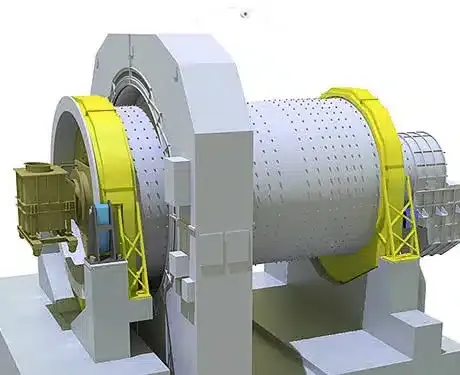
Discharge grate panels with optimised aperture patterns for efficient slurry removal and ball retention
OEM Compatibility
ATF manufactures grate systems for all ball mill makes with grate discharge configurations.
Metso Outotec
- Grate discharge mills
FLSmidth
- Grate discharge mills
ThyssenKrupp
- Grate discharge mills
Custom Mills
- Any grate discharge configuration
Need Ball Mill Grates?
Send your mill specifications for grate system recommendations.
Material Options for Grates
Grate material selection considers both wear resistance and the potential for aperture plugging.
| Material | Hardness | Application | Notes |
|---|---|---|---|
| Chrome-Moly Steel | 350-450 BHN | Standard grate panels | Good wear resistance |
| Natural Rubber | 60-70 Shore A | Anti-pegging, corrosive slurries | Flexibility reduces plugging |
| Polyurethane | 85-95 Shore A | Abrasive-corrosive conditions | Combines wear and corrosion resistance |
Chrome-Moly Steel
Natural Rubber
Polyurethane
Note: Grate aperture size significantly affects mill operation. Consult ATF for recommendations based on your circuit requirements.
Grates FAQs
Find answers to common questions about grates materials, selection, maintenance, and ordering. Can't find what you're looking for?
Contact Our TeamWhat causes grate plugging?
How do I select the right aperture size?
When should grates be replaced?
Technical content reviewed by ATF Engineering Team | Metallurgical specifications verified against ASTM/ISO standards
Get a Quote for Grate Systems
Provide mill specifications for recommendations.
Contact ATF Engineering