

Key Specifications
- Anvil Hardness (WC)
- 86-91 HRA tungsten carbide segments
- Chrome Liner Hardness
- 60-64 HRC high-chrome white iron
- Manganese Grade
- Mn18Cr2 (200-240 HB, work-hardens to 500+ HB)
- AR Plate Options
- AR400 (360-440 HB) and AR500 (470-540 HB)
- Positions
- Anvil ring, upper chamber, lower chamber, distribution
- Operating Modes
- Rock-on-rock and rock-on-iron configurations
Material Options for VSI Wear Plates
Wear plate material selection depends on position within the crusher and whether direct impact or sliding abrasion is the primary wear mechanism.
| Material | Hardness | Application | Notes |
|---|---|---|---|
| Tungsten Carbide (Anvils) | 86-91 HRA | Anvil ring segments, high-velocity impact zones | Maximum wear life in abrasive applications |
| High-Chrome White Iron | 60-64 HRC | Anvil rings, upper chamber plates | Good abrasion resistance, cost-effective |
| Mn18Cr2 Manganese | 200-240 HB | Impact areas, rock-on-rock buildup plates | Work-hardens under impact |
| AR400/AR500 Plate | 360-500 HB | Lower chamber, sliding wear areas | Cost-effective for moderate wear |
Tungsten Carbide (Anvils)
High-Chrome White Iron
Mn18Cr2 Manganese
AR400/AR500 Plate
Note: Rock-on-rock operation builds autogenous lining that protects housing. Rock-on-iron requires more wear-resistant materials for anvil positions.
VSI Wear Plates: Chamber Protection Components
Wear plates protect the VSI crusher housing from the high-velocity material stream created by the spinning rotor, which ejects feed material at speeds of 60-80 m/s in a radial pattern that impacts the surrounding chamber surfaces with substantial kinetic energy. In rock-on-iron operating mode, anvil ring segments manufactured from tungsten carbide (86-91 HRA), high-chrome white iron (60-64 HRC), or ceramic composite materials form the primary impact surface where size reduction occurs through particle-to-surface collision. In rock-on-rock mode, profiled wear plates allow crushed material to accumulate and form an autogenous lining that serves as the impact surface, producing size reduction through particle-to-particle collision that tends to generate a more cubical product shape. Regardless of operating mode, multiple categories of wear plates protect the housing shell, rotor cavity, and transition zones from erosive wear that would otherwise damage the structural castings.
Wear plate positions within the VSI crushing chamber experience fundamentally different wear mechanisms that require position-specific material selection for optimal wear life and cost-effectiveness. Upper chamber areas directly opposite the rotor discharge ports experience the highest velocity impacts from material ejected at near-horizontal trajectories, requiring materials with excellent impact resistance such as Mn18Cr2 manganese steel at 200-240 HB that work-hardens to 500+ HB under sustained impact, or tungsten carbide anvil segments at 86-91 HRA for rock-on-iron configurations. Lower chamber areas experience predominantly sliding abrasion from material cascading downward after the initial impact event, where AR400 (360-440 HB) or AR500 (470-540 HB) abrasion-resistant plate provides cost-effective protection. Material selection, plate thickness, and replacement frequency should all be optimized independently for each position based on measured wear rates.
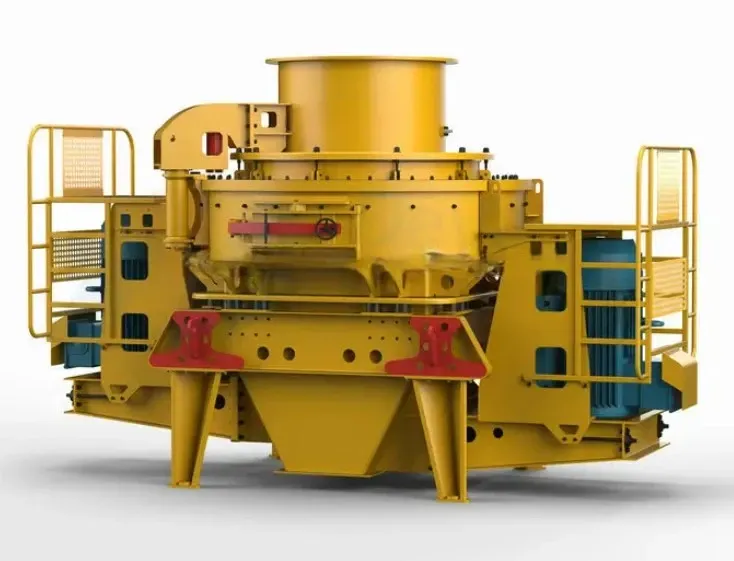
Wear plates and cavity liners protect the rotor body and crushing chamber from high-velocity abrasion
Key Features of ATF VSI Wear Plates
Anvil Ring Segments
Impact surfaces for rock-on-iron operation in tungsten carbide, ceramic composite, and high-chrome options.
Upper Wear Plates
Housing protection in the upper chamber where material velocity is highest.
Lower Wear Plates
Protection for lower housing areas where material accumulates after impact.
Distribution Plates
Material flow guides that direct feed into the rotor and protect surrounding surfaces.
Position-Specific Materials
Different materials available for different positions based on wear mechanism.
Complete Liner Sets
Complete chamber liner sets for efficient replacement during maintenance.
Need VSI Wear Plates?
Send your VSI crusher model for a quote on chamber liners and wear plates.
OEM Compatibility
ATF manufactures wear plates for all major VSI crusher brands with correct profiles and mounting configurations.
Metso Barmac
- B Series (B5100, B6150, B7150, B9100)
Sandvik
- CV Series (CV116, CV117, CV128, CV129, CV218, CV228, CV229)
Terex Canica
- VSI Canica Series
Kleemann
- RAINER VSI Series
REMco
- SandMax, ST Series
Kemco
- KID Series
Wear Plates FAQs
Find answers to common questions about wear plates materials, selection, maintenance, and ordering. Can't find what you're looking for?
Contact Our TeamHow often should wear plates be replaced?
Can I convert from rock-on-iron to rock-on-rock mode?
What causes uneven wear on anvil rings?
How do wear plates affect product shape?
Technical content reviewed by ATF Engineering Team | Metallurgical specifications verified against ASTM/ISO standards
Get a Quote for VSI Wear Plates
Provide your crusher model for quotation on chamber liners.
Contact ATF Engineering