

Key Specifications
- Material Grades
- Mn13Cr2, Mn14Cr2, Mn18Cr2
- Surface Hardness
- 170-240 HB initial; work-hardens to 500+ HB
- Typical Thickness
- 40-120 mm depending on crusher model
- Weight Range
- 150-2,500 kg per piece
- Mounting
- Bolt-on with countersunk fasteners
- Configuration
- One-piece or multi-segment designs
Key Features of ATF Cheek Plates
Chamber-Matched Profiles
Cheek plates profiled to match specific jaw crusher chambers. Correct fit maintains proper crushing geometry.
Manganese Steel Construction
Manufactured from Mn14-Mn18 manganese steel for optimal work-hardening and wear resistance.
Secure Mounting
Bolt-on designs with countersunk fasteners to prevent interference with material flow.
Multiple Thickness Options
Standard and heavy-duty thickness to match wear rates with maintenance schedules.
Segmented Designs
Multi-piece cheek plates available for easier replacement without removing major components.
OEM Compatibility
Direct replacement for all major jaw crusher manufacturers with guaranteed fit.
Cheek Plates: Side Wall Protection for Jaw Crushers
Cheek plates (also called side liners or wear plates) protect the side walls of the jaw crusher frame from abrasive wear during the crushing process. As feed material travels through the crushing chamber from the feed opening to the discharge gap, it contacts these side surfaces under substantial compressive and shearing forces. Without properly fitted cheek plates, the precision-machined frame surfaces would erode, leading to chamber geometry distortion, reduced nip angle effectiveness, and ultimately costly frame repairs or replacement. Cheek plates are manufactured from austenitic manganese steel conforming to ASTM A128 standards, with grades ranging from Mn13Cr2 through Mn18Cr2 to match the abrasiveness of the processed material.
Cheek plate wear patterns vary significantly with feed material characteristics, crusher chamber design, and operating parameters such as CSS setting and feed distribution. Higher manganese grades like Mn18Cr2 provide substantially longer wear life in abrasive applications involving granite, basalt, or quartzite, though at increased material cost. Most aggregate and mining operators find that standard Mn14Cr2 provides the optimal balance of wear life and cost-effectiveness for limestone, sandstone, and similar medium-abrasion feeds. For operations processing highly siliceous materials with SiO2 content above 65%, upgrading to Mn18Cr2 typically reduces total cost per ton by extending replacement intervals from weeks to months, offsetting the higher per-unit cost.
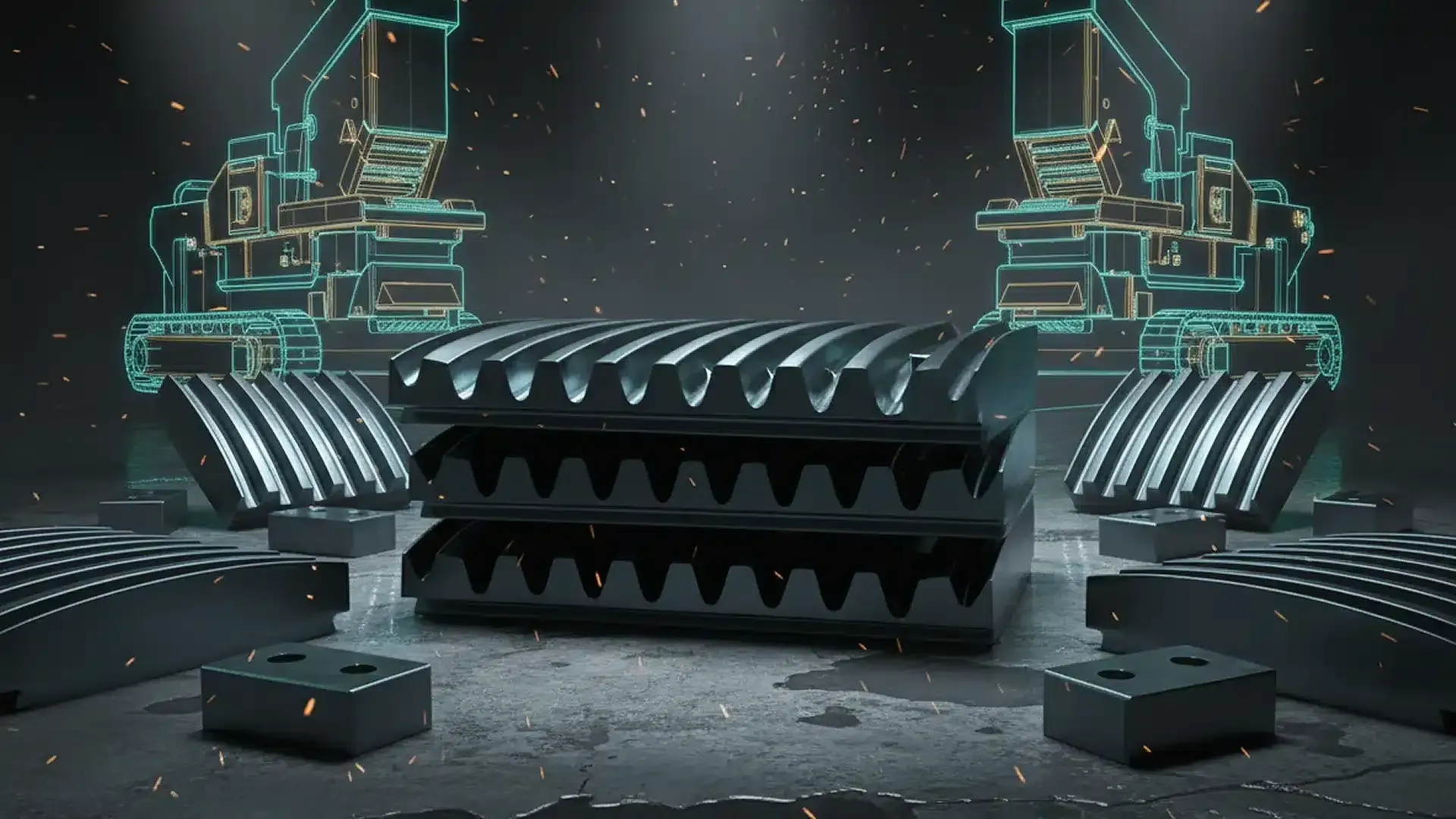
Manganese steel cheek plates protect the crusher side walls from abrasive wear — matched to jaw chamber profile
OEM Compatibility
ATF manufactures cheek plates for all major jaw crusher brands with model-specific profiles and mounting configurations.
Metso
- C Series (C80, C96, C100, C106, C110, C116, C125, C130, C140, C145, C160, C200)
Sandvik
- CJ Series (CJ211, CJ411, CJ412, CJ612, CJ613, CJ615, CJ815)
- UJ Series Mobile
Terex / Finlay
- J-1170, J-1175, J-1480
- Pegson Series
Kleemann
- MC 100, MC 110, MC 120, MC 140
McCloskey
- J35, J40, J45, J50
Komatsu/Komatsu-BR
- BR380, BR550, BR580
Need Replacement Cheek Plates?
Send your jaw crusher model for a quote with correct dimensions and material grade.
Material Options for Cheek Plates
Cheek plates are manufactured from manganese steel grades selected for the abrasiveness of the material being processed. Higher grades provide longer wear life in demanding applications.
| Material | Hardness | Application | Notes |
|---|---|---|---|
| Mn13Cr2 Manganese | 170-200 HB (work-hardens) | Soft rock, limestone, low-abrasion feeds | Cost-effective for lighter duty applications |
| Mn14Cr2 Manganese | 180-210 HB (work-hardens) | Standard applications, moderate abrasion | Good balance of cost and wear life |
| Mn18Cr2 Manganese | 200-240 HB (work-hardens to 500+ HB) | Abrasive materials, extended wear life required | Premium grade for demanding conditions |
Mn13Cr2 Manganese
Mn14Cr2 Manganese
Mn18Cr2 Manganese
Note: Cheek plate grade typically matches the jaw plate grade. Using different grades for jaw plates and cheek plates is uncommon but can be specified for unusual applications.
Cheek Plates FAQs
Find answers to common questions about cheek plates materials, selection, maintenance, and ordering. Can't find what you're looking for?
Contact Our TeamHow often should cheek plates be replaced?
What causes uneven cheek plate wear?
Can cheek plates be flipped or rotated?
Should I replace cheek plates with every jaw plate change?
Technical content reviewed by ATF Engineering Team | Metallurgical specifications verified against ASTM/ISO standards
Get a Quote for Cheek Plates
Provide your jaw crusher model for quotation with correct dimensions and material recommendations.
Contact ATF Engineering