

Key Specifications
- Aperture Range
- 10-150 mm custom sizing available
- Material Grades
- Mn14Cr2, Mn18Cr2, high-chrome (60-64 HRC), AR400/AR500
- Bar Thickness
- 25-80 mm depending on duty and crusher model
- Open Area
- 40-70% depending on product specification
- Operating Temperature
- Standard to 400°C (heat-resistant alloys available)
- Configuration
- Flat, curved, and segmented profiles
Grate Bars: Product Sizing for Hammer Crushers
Grate bars (also called screens, discharge grates, or classifying liners) control the product size from hammer crushers by functioning as a classifying barrier that permits undersized material to pass through while retaining oversize particles for continued reduction by the hammer rotor. The three primary design parameters, aperture size, bar profile geometry, and open area percentage, collectively determine throughput capacity, product gradation curve, and energy consumption per ton of finished product. Aperture sizes range from 10 mm for fine grinding applications in hammer mills to 150 mm or larger for primary hammer crushers processing run-of-quarry feed. Open area percentages typically range from 40% to 70%, with higher open areas improving throughput but potentially allowing more oversize material into the product stream.
Grate bars experience a demanding combination of impact loading from direct hammer contact and abrasive wear from material passing through the apertures at high velocity. The wear mechanism varies by position within the grate assembly: bars directly in the hammer path experience severe impact requiring manganese steel grades (Mn14Cr2 or Mn18Cr2 per ASTM A128), while bars in lower positions see predominantly sliding abrasion where high-chrome white iron at 60-64 HRC or AR400/AR500 plate provides superior wear life. ATF manufactures grate bars for all major hammer crusher and hammer mill models with custom aperture sizing, and our engineering team can recommend optimal aperture configurations based on your target product gradation curve and feed material characteristics.
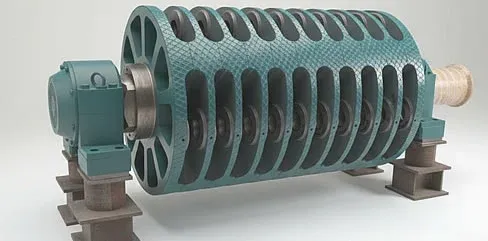
Grate bars control product discharge size — available in manganese, chrome and AR plate matched to application
Key Features of ATF Grate Bars
Custom Aperture Sizing
Aperture sizes from 10mm to 150mm+ to match your product specification requirements.
Optimized Open Area
Bar spacing and profile designed to maximize throughput while maintaining target gradation.
Wear-Resistant Materials
Manganese, high-chrome, and specialty alloys selected for your specific wear conditions.
Model-Specific Profiles
Grate bar profiles matched to specific crusher models for proper fit and function.
Reversible Designs
Some grate bar designs allow rotation or reversal to utilize wear on multiple surfaces.
Complete Sets
Complete grate sets supplied with consistent dimensions and materials across all positions.
Material Options for Grate Bars
Grate bar material selection depends on the wear mechanism (impact vs. abrasion) and whether the bars experience direct hammer contact.
| Material | Hardness | Application | Notes |
|---|---|---|---|
| Mn14Cr2 Manganese | 180-210 HB (work-hardens) | High-impact zones, hammer contact areas | Good impact resistance, moderate abrasion life |
| Mn18Cr2 Manganese | 200-240 HB (work-hardens to 500+ HB) | Heavy-duty impact applications | Maximum toughness for severe impact |
| High-Chrome White Iron | 60-64 HRC | Abrasive feeds, minimal hammer contact | Maximum abrasion resistance |
| AR400/AR500 Plate | 360-500 HB | Moderate wear, cost-sensitive applications | Good balance of cost and wear life |
Mn14Cr2 Manganese
Mn18Cr2 Manganese
High-Chrome White Iron
AR400/AR500 Plate
Note: Grate bar apertures can plug with sticky or wet materials. Consider larger apertures and reduced open area percentage for difficult feeds.
Need Custom Grate Bars?
Send your crusher model and target product size for a quote with recommended apertures.
OEM Compatibility
ATF manufactures grate bars for all major hammer crusher and hammer mill brands with correct profiles and mounting configurations.
Williams
- Meteor, Impact Dryer, Swing Hammer
Pennsylvania Crusher
- Reversible, Non-Reversible, Ring Granulator
FLSmidth
- EV Series, Clinker Crusher
Hazemag
- HPI, APS Series
Stedman
- Cage Mill, Mega-Slam
Jeffrey Rader
- Swing Hammer, Ring Hammer
Grates FAQs
Find answers to common questions about grates materials, selection, maintenance, and ordering. Can't find what you're looking for?
Contact Our TeamHow do I select the right aperture size?
What causes grate bar plugging?
How often should grate bars be replaced?
Can grate bar apertures be customized?
Technical content reviewed by ATF Engineering Team | Metallurgical specifications verified against ASTM/ISO standards
Order Custom Grate Bars
Provide your crusher model and target product size for quotation with optimal aperture recommendations.
Contact ATF Engineering