
Fackelring | Kegelbrecher-Teile | ATF

Kegelbrecher-Teile

Fackelring | Kegelbrecher-Teile | ATF

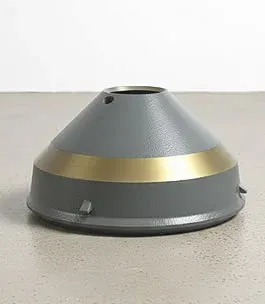
Fackelringe für Kegelbrecher. Opferverschleißringe aus Manganstahl zum Schutz des Hauptrahmens.

Mäntel Schalenpanzerungen Konkave

Technische Eckdaten

Material Grades
Mn13Cr2, Mn14Cr2, Mn18Cr2
Hardness Range
170-240 HB (softer than frame material)
Configurations
Solid ring and segmented designs
Replacement Interval
Every 1-2 liner changes (recommended)
OEM Brands
Metso, Sandvik, Terex, Telsmith, Symons, Nordberg
Standards
ASTM A128 (manganese steel castings)

Material Options for Torch Rings

Torch rings are manufactured from manganese steel grades softer than the main frame material. This ensures the torch ring wears preferentially, protecting the frame.

Mn13Cr2 Manganese

Härte:170-200 HB
Anwendung:Standard applications, soft rock
Hinweise:Most common torch ring grade

Mn14Cr2 Manganese

Härte:180-210 HB
Anwendung:General purpose, moderate abrasion
Hinweise:Slightly longer life than Mn13

Mn18Cr2 Manganese

Härte:200-240 HB
Anwendung:Abrasive applications, extended replacement intervals
Hinweise:Premium option for demanding conditions

Note: Torch ring material should always be softer than the frame material. Using excessively hard torch rings defeats their protective purpose.

Torch Rings

Torch Rings: Frame Protection for Cone Crushers

Torch rings (also called burn rings, seal rings, or frame protector rings) are sacrificial manganese steel components that sit between the bowl liner and the main frame casting in cone crushers. Their primary function is to protect the expensive main frame from contact wear if the bowl liner shifts during operation, wears unevenly, or operates with excessive clearance between the liner and frame seating surface. Cast from manganese steel conforming to ASTM A128 in grades from Mn13Cr2 to Mn18Cr2, torch rings are deliberately manufactured softer than the main frame material (typically 170-240 HB versus 250-300+ HB for the frame) to ensure preferential wear of the ring rather than the frame. This design principle means the torch ring absorbs the abrasive and impact wear from liner-to-frame contact, preserving the precise frame geometry that is critical for correct liner seating and chamber performance throughout the machine service life.

Torch rings are among the lowest-cost components in a cone crusher but protect one of the highest-value parts: the main frame casting, which can represent 25-35% of total machine replacement cost and requires 8-16 weeks lead time for new manufacture. Frame damage from worn-through torch rings typically requires field welding and machining to restore the seating surface, with repair costs ranging from several thousand to tens of thousands of dollars depending on severity, plus extended downtime during the repair process. By contrast, proactive torch ring replacement costs a fraction of this amount and can be completed during a routine liner change with no additional downtime. Many experienced operators adopt a standing policy of replacing torch rings with every liner change as preventive maintenance, recognizing that the incremental cost is negligible compared to the insurance value of protecting the frame. ATF supplies torch rings in both solid ring and segmented designs to match the specific installation requirements of your crusher model.
Frame Protection
Manganese Steel
Model-Specific
Cone crusher torch ring in manganese steel manufactured by ATF

Torch ring protects the upper bowl liner seating area from wear and material ingress

Key Features of ATF Torch Rings

Sacrificial Design

Engineered to wear before the main frame. Cost-effective protection against expensive frame damage.

Precise Fit

Manufactured to exact OEM dimensions for proper seating in the frame groove and correct liner-to-ring interface.

Wear-Resistant Materials

Mn13-Mn18 manganese steel provides durability while remaining softer than the frame material.

Multiple Configurations

Available in solid ring and segmented designs depending on crusher model and installation requirements.

Easy Inspection

Torch ring condition is easily visible during maintenance. Clear wear indicators show when replacement is needed.

Preventive Replacement

Low-cost component that should be replaced proactively. Waiting until failure risks frame damage.

Need Replacement Torch Rings?

Send your crusher model for a quote on torch rings matched to your specific frame configuration.

Request a Quote

OEM Compatibility

ATF supplies torch rings for all major cone crusher brands. Parts are manufactured to match original frame groove dimensions.

Metso

  • HP Series (HP100-HP800)
  • GP Series (GP100-GP550)

Sandvik

  • CH Series (CH420-CH895)
  • CS Series

Terex / Cedarapids

  • TC Series
  • Kodiak Series (K200-K500)

Telsmith

  • T-Series
  • H-Series

Symons

  • Standard & Shorthead (2' - 7')

Nordberg

  • Omnicone Series
FAQ

Torch Rings FAQ

Finden Sie Antworten auf häufige Fragen zu torch rings Werkstoffen, Auswahl, Wartung und Bestellung. Nicht gefunden, was Sie suchen?

Unser Team kontaktieren
How often should torch rings be replaced?
The most widely adopted industry practice is to replace torch rings with every liner change as a standard preventive maintenance item, similar to replacing gaskets during engine service. This approach eliminates the risk of frame damage from a torch ring that appeared acceptable during inspection but deteriorated before the next liner change. At minimum, torch rings must be thoroughly inspected each time liners are changed, measuring residual thickness at multiple points around the circumference using a caliper or ultrasonic gauge. Replace immediately if wear exceeds 50% of the original casting thickness at any point, if any section shows metal-to-metal contact between the liner and frame surface, or if the ring has cracked or deformed. In applications processing highly abrasive material such as granite or quartzite, torch rings may wear faster than the liner change interval, requiring mid-cycle inspection and possible replacement. The cost of a replacement torch ring is typically less than 2-3% of a liner set, making proactive replacement the most economically rational maintenance practice.
What happens if torch rings are not replaced?
A worn-through torch ring allows the bowl liner to contact the main frame casting directly, and the consequences escalate rapidly. The main frame is manufactured from cast steel or ductile iron with precisely machined seating surfaces, and direct liner contact causes abrasive grooving that destroys the dimensional accuracy required for proper liner fit. Once frame wear begins, it accelerates because the irregular surface creates concentrated contact points with elevated unit pressure. Minor frame damage can be repaired by field welding with compatible consumables (following preheat and interpass temperature controls appropriate for cast steel) followed by machining to restore the original profile. However, severe frame wear may require removing the frame from service for shop repair, or in extreme cases, frame replacement at a cost that can exceed 25-35% of a new crusher value with lead times of 8-16 weeks. During this period, the crusher is completely out of production. The total cost of replacing torch rings proactively at every liner change over the entire service life of a crusher is typically less than the cost of a single frame repair event.
Can torch rings be welded to extend life?
Weld repair of torch rings is not recommended for several technical and practical reasons. Applying weld build-up to a worn manganese steel torch ring changes the material properties in the heat-affected zone, creating areas with different hardness and wear characteristics that do not wear predictably. Manganese steel requires specific welding procedures (low heat input, limited interpass temperature below 260 degrees Celsius, and compatible filler metals such as AWS E-FeMn-A or similar) to avoid carbide precipitation and embrittlement. Even with correct welding procedures, the repaired surface will not have the same uniform microstructure as a new casting. Additionally, weld build-up changes the ring dimensions, potentially creating interference with the liner fit or altering the clearance geometry. Given that torch rings are among the lowest-cost cast components in a cone crusher—typically representing less than 2-3% of a liner set cost—there is no economic justification for repair versus replacement. New torch rings provide predictable wear behavior, correct dimensions, and reliable frame protection at a fraction of the cost and risk associated with weld repair.
Why are my torch rings wearing faster than expected?
Accelerated torch ring wear is a symptom of underlying issues with liner fit, crusher settings, or operating practices that should be investigated and corrected to prevent recurrence. The most common causes include improper bowl liner fit where the liner does not seat fully in the bowl, creating excessive clearance that allows liner movement and increased contact with the torch ring surface. Incorrect closed-side setting (CSS) that creates excessive crushing force can cause liner deflection that loads the torch ring beyond normal design conditions. Operating the crusher below optimal chamber fill (choke-fed condition) reduces the stabilizing effect of the material bed on the mantle, allowing more lateral movement that transfers to the liner-frame interface. Feeding oversize material that exceeds the crusher design capacity creates shock loads that displace the liner momentarily against the torch ring. Additionally, worn or damaged adjustment mechanism components (lock nuts, clamping rings) that do not maintain proper bowl liner clamping force allow progressive liner loosening. Before replacing the torch ring, identify and correct the root cause to prevent the same accelerated wear pattern from destroying the replacement component.

Technischer Inhalt geprüft vom ATF-Ingenieurteam | Metallurgische Spezifikationen verifiziert nach ASTM/ISO-Normen

Order Torch Rings for Your Cone Crusher

Provide your crusher model and we will quote correct torch ring dimensions and materials.

Contact ATF Engineering
25+
Years Experience
Low
Cost Protection
100%
Fit Guarantee

Fordern Sie Noch Heute ein Kostenloses Angebot An

Unser Ingenieurteam antwortet innerhalb von 24 Stunden mit detaillierten Spezifikationen, Materialempfehlungen und wettbewerbsfähigen Preisen.

24-Stunden-Antwort OEM-Passform Garantiert Weltweiter Versand