

Especificaciones clave
- Material Grades
- Medium carbon steel, cast iron, alloy steel
- Hardness Range
- 180-300 HB depending on grade
- Failure Mode
- Calibrated fracture at predetermined load threshold
- Configuration
- Single-toggle and double-toggle styles
- End Geometry
- Precision-machined radii for toggle seat mating
- Typical Weight
- 5-150 kg depending on crusher size
Toggle Plates: Engineered Failure Point for Frame Protection
The toggle plate is a critical safety component that serves as a mechanical fuse in jaw crusher operation, providing a controlled failure point engineered to protect the crusher frame, pitman assembly, and eccentric shaft from catastrophic damage. When uncrushable material such as tramp iron, excavator teeth, drill steel, or oversized rock enters the crushing chamber and generates forces exceeding the design threshold, the toggle plate fractures cleanly rather than transmitting destructive loads into components that cost orders of magnitude more to replace. This sacrificial design principle, established in jaw crusher engineering for over a century, remains the most reliable and cost-effective method of overload protection across the industry, complementing modern hydraulic relief systems found on some larger crusher models.
Toggle plates are engineered with specific cross-sectional dimensions and material properties calculated to fail at a predetermined load threshold unique to each crusher model and size class. The failure strength is primarily governed by the cross-sectional area at the designed fracture point, not by material hardness alone. Using undersized toggle plates provides inadequate overload protection and may result in premature failure during normal operation, while oversized plates may not fracture when needed, transmitting excessive forces into the pitman, eccentric bearings, and main frame castings. ATF manufactures toggle plates to exact OEM specifications using medium carbon steel, cast iron, or alloy steel depending on the original design, ensuring correct failure characteristics and proper seating in both the pitman and frame toggle seats.
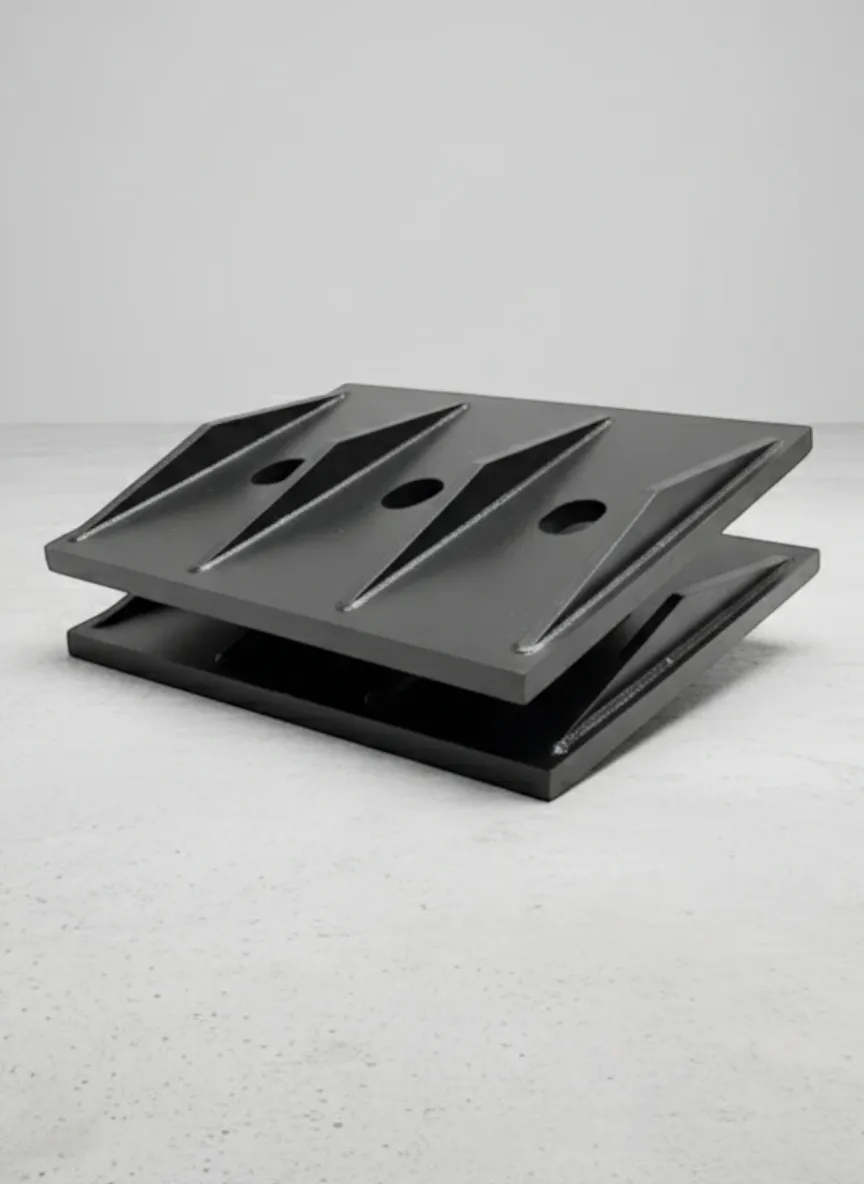
Toggle plates transfer crushing force and act as a mechanical fuse — designed to fracture under overload to protect the main frame
Key Features of ATF Toggle Plates
Calibrated Failure Strength
Cross-section dimensions calculated to fail at the correct load threshold. Protects expensive components from damage.
Precise Dimensions
End radii and seat geometry machined to mate properly with toggle seats. Correct fit distributes loads evenly.
Quality Steel
Manufactured from appropriate grades of steel to ensure consistent mechanical properties and predictable failure mode.
Model-Specific Sizing
Toggle plates sized for specific jaw crusher models. Using incorrect sizes defeats the protective function.
Multiple Styles
Single toggle and double toggle configurations available depending on crusher design.
Economical Spares
Low-cost insurance against expensive frame damage. Keep spares on hand for immediate replacement.
Toggle Plate Specifications
Toggle plates are manufactured from steel grades selected for consistent mechanical properties. The failure strength is determined by cross-sectional dimensions rather than material hardness.
| Material | Dureza | Aplicación | Notas |
|---|---|---|---|
| Medium Carbon Steel | 200-250 HB | Standard toggle plates for most jaw crushers | Consistent failure strength, predictable behavior |
| Cast Iron | 180-220 HB | Some OEM designs, brittle failure mode | Clean fracture, less deformation before failure |
| Alloy Steel | 250-300 HB | Heavy-duty crushers with higher load thresholds | Higher strength-to-weight ratio |
Medium Carbon Steel
Cast Iron
Alloy Steel
Critical: Toggle plate dimensions must match OEM specifications exactly. Incorrect sizing can result in either inadequate protection or damage to other components.
Need Replacement Toggle Plates?
Send your jaw crusher model for toggle plates manufactured to correct OEM specifications.
OEM Compatibility
ATF manufactures toggle plates for all major jaw crusher brands with correct dimensions and failure strength specifications.
Metso
- C Series (C80, C96, C100, C106, C110, C116, C125, C130, C140, C145, C160, C200)
Sandvik
- CJ Series (CJ211, CJ411, CJ412, CJ612, CJ613, CJ615, CJ815)
- UJ Series Mobile
Terex / Finlay
- J-1170, J-1175, J-1480
- Pegson Series
Kleemann
- MC 100, MC 110, MC 120, MC 140
McCloskey
- J35, J40, J45, J50
Pioneer / Lippmann
- Pioneer Series
- Lippmann 3042, 3650, 4248
Toggle Plates Preguntas frecuentes
Encuentre respuestas a preguntas comunes sobre toggle plates materiales, selección, mantenimiento y pedidos. ¿No encuentra lo que busca?
Contactar a nuestro equipoWhat causes toggle plate failure?
Should I stock spare toggle plates?
Can I use toggle plates from a different crusher model?
How do I install toggle plates safely?
Contenido técnico revisado por el equipo de ingeniería de ATF | Especificaciones metalúrgicas verificadas según normas ASTM/ISO
Order Toggle Plates for Your Jaw Crusher
Provide your jaw crusher model for toggle plates manufactured to correct specifications.
Contact ATF Engineering