

Especificaciones clave
- Bushing Alloys
- C93200, C95400, C93700 bronze; Babbitt-lined
- Bushing Hardness
- 20-170 HB depending on alloy
- Radial Clearance
- 0.15-0.40 mm typical (model-specific)
- Oil Film Thickness
- 0.05-0.15 mm minimum operating
- OEM Brands
- Metso, Sandvik, Terex, Telsmith, Symons, FLSmidth
- Operating Temperature
- 40-65 deg C normal oil sump range
- Standards
- ASTM B505 (bronze), ASTM B23 (babbitt)
Bushing Material Options
Eccentric bushings are manufactured from bronze alloys selected for load capacity, wear resistance, and compatibility with the lubrication system. Material selection depends on the specific crusher design and operating conditions.
| Material | Dureza | Aplicación | Notas |
|---|---|---|---|
| C93200 Leaded Tin Bronze | 60-70 HB | Standard main shaft bushings | Good load capacity, excellent lubricity |
| C95400 Aluminum Bronze | 150-170 HB | High-load applications, heavy-duty crushers | Higher strength, good corrosion resistance |
| C93700 High-Lead Bronze | 55-65 HB | Emergency bearing, contaminated lube conditions | Maximum embeddability, boundary lubrication |
| Babbitt-Lined Bronze | 20-30 HB (babbitt) | OEM replacement where babbitt specified | Conformable surface, sacrificial wear layer |
C93200 Leaded Tin Bronze
C95400 Aluminum Bronze
C93700 High-Lead Bronze
Babbitt-Lined Bronze
Note: Bushing material should match OEM specification. Contact ATF with crusher model for correct alloy selection.
Eccentric Assemblies: The Heart of Gyratory Motion
The eccentric assembly is the precision mechanism that creates the characteristic gyratory crushing motion of cone crushers, converting rotational input from the drive pinion into the eccentric orbit of the main shaft and mantle that produces the compression-release crushing cycle. The eccentric throw (the offset distance between the main shaft centerline and the eccentric bore centerline, typically ranging from 10-40 mm depending on crusher model) directly determines the crushing stroke, throughput capacity, and reduction ratio of the machine. The assembly operates at rotational speeds of 200-400 RPM while supporting the full weight and crushing forces of the main shaft, mantle, and material load—total bearing loads that can exceed 200-500 kN in large machines. Eccentric housings are manufactured from cast or ductile iron with precision-machined bores, and the critical bearing surfaces are provided by centrifugally cast bronze bushings conforming to ASTM B505 or babbitt liners per ASTM B23.
Eccentric assemblies rely on precision bronze bushings that support the main shaft while allowing smooth rotation with minimal friction and wear. These bushings operate under hydrodynamic lubrication conditions where a thin oil film (typically 0.05-0.15 mm minimum thickness) separates the shaft surface from the bushing surface, preventing metal-to-metal contact. Maintaining this oil film requires correct radial clearance (typically 0.15-0.40 mm depending on shaft diameter and model), adequate oil flow, proper oil viscosity matched to operating temperature (normal sump temperature range 40-65 degrees Celsius), and clean oil free from abrasive contaminants. Worn bushings cause increased clearances that reduce oil film pressure and allow shaft wobble, generating vibration that accelerates wear throughout the crusher and ultimately leads to main shaft damage from metal-to-metal contact. ATF supplies both complete eccentric assemblies (including housing, bushings, counterweights, and gear) and individual bushing components cast from C93200 leaded tin bronze, C95400 aluminum bronze, C93700 high-lead bronze, or babbitt-lined bronze matched to the OEM specification.
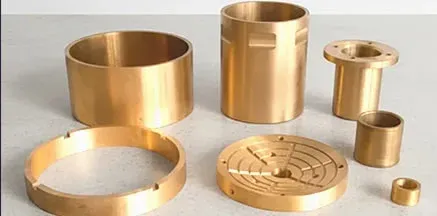
Eccentric assembly controls the gyrating motion that drives compression crushing — precision bore and journal tolerances
Key Features of ATF Eccentric Components
Precision Bore Geometry
Eccentric bore machined to exact specifications for correct throw and proper bushing fit. Critical for crusher performance and bearing life.
Premium Bronze Alloys
Bushings cast from leaded bronze, aluminum bronze, or phosphor bronze alloys selected for load capacity and lubricity.
Oil Groove Patterns
Bushing oil grooves machined to OEM patterns for proper lubricant distribution. Correct groove geometry ensures adequate oil film.
Interference Fits
Bushings manufactured with correct interference for press-fit installation. Proper fit prevents spinning and ensures heat transfer.
Complete Assemblies
Complete eccentric assemblies available including housing, bushings, counterweights, and gear where applicable.
Individual Components
Individual bushings and wear components available for field replacement without complete assembly change.
Need Eccentric Components?
Send your crusher model for a quote on complete assemblies or individual bushings.
OEM Compatibility
ATF manufactures eccentric assemblies and bushings for all major cone crusher brands with correct throw specifications and bushing fits.
Metso
- HP Series (HP100-HP800)
- GP Series (GP100-GP550)
Sandvik
- CH Series (CH420-CH895)
- CS Series
- H-Series Hydrocone
Terex / Cedarapids
- TC Series
- Kodiak Series
Telsmith
- T-Series (T200-T900)
- H-Series
Symons
- Standard (2'-7')
- Shorthead (2'-7')
FLSmidth
- Raptor Series
Eccentric Preguntas frecuentes
Encuentre respuestas a preguntas comunes sobre eccentric materiales, selección, mantenimiento y pedidos. ¿No encuentra lo que busca?
Contactar a nuestro equipoWhat causes eccentric bushing failure?
How do I know if eccentric bushings are worn?
Can worn bushings be rebabbitted?
What clearances should eccentric bushings have?
Contenido técnico revisado por el equipo de ingeniería de ATF | Especificaciones metalúrgicas verificadas según normas ASTM/ISO
Order Eccentric Assemblies and Bushings
Provide your crusher model for quotation on complete assemblies or individual components.
Contact ATF Engineering