

Spécifications clés
- High-Chrome Grades
- A05 (Cr27), A07 (Cr27Mo), A49 Hyperchrome
- Chrome Hardness
- 600–700+ BHN (grade-dependent)
- Rubber Grades
- R55 (55 Shore A), R26 (40 Shore A), R08 Neoprene
- Balance Standard
- ISO 1940 G2.5 dynamic balance
- Pump Compatibility
- Warman AH, Metso HM/MD, KSB GIW, ITT Goulds
- Size Range
- 1.5/1 through 20/18 (Warman frame equivalent)
- Max Temperature
- 70 C (rubber), 120 C (chrome)
- Certification
- ISO 9001 manufacturing, full MTR supplied
Key Features of ATF Slurry Pump Impellers
High-Chrome White Iron (Cr27)
Premium A532 Class III chrome iron with 27% chromium content delivers 600+ BHN hardness. Industry standard for coarse abrasive slurries in mill discharge and cyclone feed applications.
Natural Rubber Lined
Soft natural rubber (40-60 Shore A) provides superior erosion resistance for fine particle slurries below 150 microns. Ideal for flotation circuit and tailings applications.
Ceramic Insert Technology
Silicon carbide or alumina ceramic inserts in high-wear vane areas extend service life 2-3x in ultra-abrasive applications. Available for select impeller sizes.
Precision Hydraulic Profiles
Vane geometry reverse-engineered from OEM designs using 3D scanning. Maintains original pump curve characteristics and efficiency after replacement.
Dynamic Balance
All impellers dynamically balanced to ISO 1940 G2.5 standard. Reduces vibration, bearing loads, and mechanical seal stress for extended component life.
Wear-Resistant Coatings
Optional tungsten carbide HVOF coating or ceramic plasma spray on suction inlet areas where cavitation-erosion accelerates wear.
Slurry Pump Impellers: The Heart of Centrifugal Slurry Pumps
Impellers are the rotating component at the centre of every centrifugal slurry pump, and their design, material, and condition are the single most significant factors determining pump head, flow rate, efficiency, and maintenance intervals. As the impeller spins at speeds of 400–1,200 RPM depending on pump frame size, vanes accelerate slurry outward through centrifugal force, converting mechanical energy into hydraulic energy that drives the slurry through the piping system. In abrasive slurry service typical of mining and mineral processing, impeller wear is the primary performance-limiting factor. ATF manufactures aftermarket impellers from A05 high-chrome white iron (Cr27, 600–650 BHN per ASTM A532 Class III), A07 Cr27Mo with added molybdenum for corrosion resistance (650–700 BHN), A49 hyperchrome (700+ BHN) for extreme abrasion, and natural rubber (R55 at 55 Shore A, R26 at 40 Shore A) for fine-particle and corrosive applications. Every impeller is dynamically balanced to ISO 1940 G2.5 to minimise vibration, bearing loads, and mechanical seal stress.
Mining and mineral processing applications subject impellers to extreme erosion-corrosion from abrasive solids—including silica, alumina, magnetite, and other hard minerals at concentrations of 10–50% solids by weight—combined with chemically aggressive carrier fluids ranging from pH 2 to pH 12. Material selection must balance erosion resistance against corrosion resistance, with the optimal choice depending on slurry pH, particle size distribution (D85 above or below 150 microns is the primary decision threshold), solids concentration, and impeller tip speed. ATF manufactures aftermarket impellers in high-chrome alloys, natural rubber, neoprene, polyurethane, and ceramic composite configurations to match any application requirement. All impeller hydraulic profiles are reverse-engineered from OEM designs using 3D scanning and CMM verification to ensure replacement impellers maintain original pump curve characteristics, efficiency ratings, and NPSH performance.
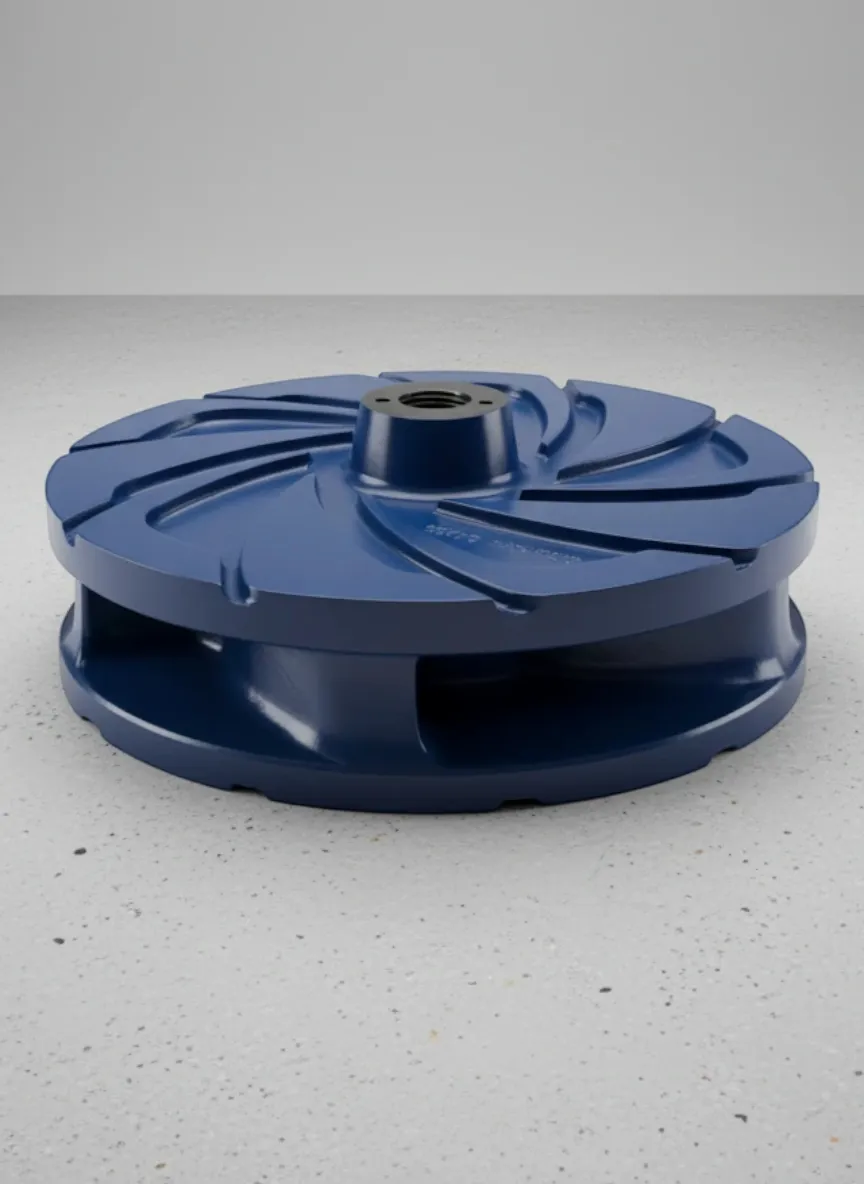
A05 high-chrome white iron impeller dynamically balanced to ISO 1940 G2.5 for mining slurry pump applications
OEM Compatibility
ATF manufactures aftermarket impellers for all major slurry pump brands used in mining and mineral processing. Parts are engineered to OEM specifications with guaranteed dimensional fit and hydraulic performance.
Warman / Weir Minerals
- AH Series (1.5/1, 2/1.5, 3/2, 4/3, 6/4, 8/6, 10/8, 12/10, 14/12, 16/14, 18/16, 20/18)
- AHP Series (High Pressure)
- L Series (Light Duty)
- M Series (Medium Duty)
- HH Series (Heavy Duty High Head)
Metso (Sala/Thomas/Orion)
- HM Series
- HR Series
- HS Series
- MD Series Mill Discharge
- VF Series Froth
KSB GIW
- LSA Series
- LCC Series
- LCV Series
- MDX Mill Duty
- TBC Tailings/Booster
ITT Goulds
- XHD Extra Heavy Duty
- SRL Slurry
- 5500 Series
- CV 3196 Chemical/Slurry
Flowserve
- Durco Mark III Slurry
- IDP Slurry
Schurco Slurry
- S Series
- H Series
- SC Series
Need Replacement Impellers for Your Slurry Pumps?
Send your pump model and current operating conditions for material recommendations and pricing.
Impeller Material Options
Impeller material selection is driven by slurry characteristics including particle size, solids concentration, pH, and temperature. High-chrome alloys dominate coarse particle applications while elastomers excel with fine particles and corrosive slurries.
| Matériau | Dureté | Application | Notes |
|---|---|---|---|
| A05 High-Chrome (Cr27) | 600-650 BHN | Mill discharge, cyclone feed, coarse tailings >150 microns | Industry standard for mining. Best erosion resistance for coarse particles |
| A07 High-Chrome (Cr27Mo) | 650-700 BHN | Highly abrasive slurries with moderate corrosion | Molybdenum addition improves corrosion resistance |
| A49 Hyperchrome | 700+ BHN | Ultra-abrasive mineral sands, heavy media circuits | Maximum hardness for extreme erosion applications |
| R55 Natural Rubber | 55 Shore A | Fine slurries <150 microns, flotation, tailings transfer | Superior fine particle erosion resistance, max temp 70C |
| R08 Neoprene | 65 Shore A | Oily slurries, moderate chemical exposure | Better oil and chemical resistance than natural rubber |
| U01 Polyurethane | 90 Shore A | Fine abrasive slurries, high-velocity applications | Excellent cut resistance, limited temperature range |
A05 High-Chrome (Cr27)
A07 High-Chrome (Cr27Mo)
A49 Hyperchrome
R55 Natural Rubber
R08 Neoprene
U01 Polyurethane
Note: Material codes follow industry-standard Warman/Weir nomenclature. Consult ATF engineering for application-specific recommendations.
Impellers FAQ
Trouvez les réponses aux questions courantes sur impellers les matériaux, la sélection, la maintenance et les commandes. Vous ne trouvez pas ce que vous cherchez ?
Contacter notre équipeHow do I know when to replace slurry pump impellers?
Should I use rubber or chrome impellers?
What causes premature impeller wear?
Can I mix impeller and liner materials?
Related Slurry Pump Parts
Volute Liners
Casing liners that form the volute chamber, directing flow from impeller to discharge.
En savoir plusThroatbush Liners
Suction side wear components protecting the pump inlet and frame plate.
En savoir plusFrame Plates & Expellers
Back liner plates and dynamic sealing components for shaft protection.
En savoir plusContenu technique révisé par l'équipe d'ingénierie ATF | Spécifications métallurgiques vérifiées selon les normes ASTM/ISO
Get a Quote for Slurry Pump Impellers
Provide your pump model and operating conditions for material recommendations and competitive pricing.
Contact ATF Engineering