

Spécifications clés
- Grades Available
- Grade 8.8, 10.9, 12.9 (Metric) / SAE Grade 5, 8 (Imperial)
- Yield Strength
- 640 MPa (8.8) / 830 MPa (10.9) / 970 MPa (12.9)
- Hardness Range
- 22-44 HRC depending on grade
- Size Range
- M12 to M36 (metric), 1/2" to 1-1/2" (imperial)
- Standards
- ISO 898-1 (metric), SAE J429 (imperial)
- Surface Finishes
- Zinc plated, phosphate coated, or plain
Fastener Specifications
Fastener grade selection must match or exceed original equipment specifications. Using lower-grade fasteners is dangerous. Higher grades may be used where compatible with the joint design.
| Matériau | Dureté | Application | Notes |
|---|---|---|---|
| Grade 8.8 (Metric) | 22-32 HRC | Light-duty fastening, non-critical positions | Yield: 640 MPa. Not recommended for blow bar retention. |
| Grade 10.9 (Metric) | 32-39 HRC | Standard blow bar retention fasteners | Yield: 830 MPa. Most common grade for HSI crushers. |
| Grade 12.9 (Metric) | 39-44 HRC | Heavy-duty applications, large rotors | Yield: 970 MPa. Required for high-impact service. |
| SAE Grade 8 (Imperial) | 33-39 HRC | US/Imperial equivalent to Grade 10.9 | Yield: 827 MPa. Common in North American equipment. |
Grade 8.8 (Metric)
Grade 10.9 (Metric)
Grade 12.9 (Metric)
SAE Grade 8 (Imperial)
Critical: Never substitute lower-grade fasteners. Stretched or previously torqued fasteners should be replaced, not reused.
High-Strength Fasteners for Safe Blow Bar Retention
Fixation bolts secure blow bars, shoes, wedges, and other retention components to the rotor body of HSI impact crushers. These fasteners operate under some of the most demanding conditions found in any industrial application: repeated shock loading from crushing impacts generating instantaneous forces exceeding 100 kN, high centrifugal forces from rotor rotation at 500-1,000+ RPM, continuous vibration from material flow and residual imbalance, and temperature fluctuations from ambient exposure. Fixation bolts are manufactured to ISO 898-1 (metric) or SAE J429 (imperial) standards in Grade 10.9 (830 MPa yield, 32-39 HRC) and Grade 12.9 (970 MPa yield, 39-44 HRC) specifications. Using incorrect or worn fasteners that cannot maintain adequate preload under these conditions is a serious safety risk that can result in blow bar ejection, causing catastrophic damage to the crusher and creating hazardous projectile conditions.
ATF supplies certified high-strength fasteners matched to specific rotor designs, with full material traceability and grade verification markings per ISO 898-1 or SAE J429 standards. All fastener kits include correct torque specifications calculated for the specific thread size, grade, and lubrication condition, because torque requirements vary significantly with these parameters. For example, an M24 Grade 10.9 bolt requires approximately 700 Nm in dry condition but only 500 Nm with anti-seize compound applied. Fasteners should be replaced at regular intervals regardless of visible condition, because high-strength bolts subjected to cyclic loading accumulate fatigue damage that is invisible to external inspection but progressively reduces the bolt clamping capacity. The total cost of a complete fastener replacement set is typically under 1-2% of the total blow bar service expense, making routine fastener replacement the most cost-effective maintenance practice in impact crusher operation.
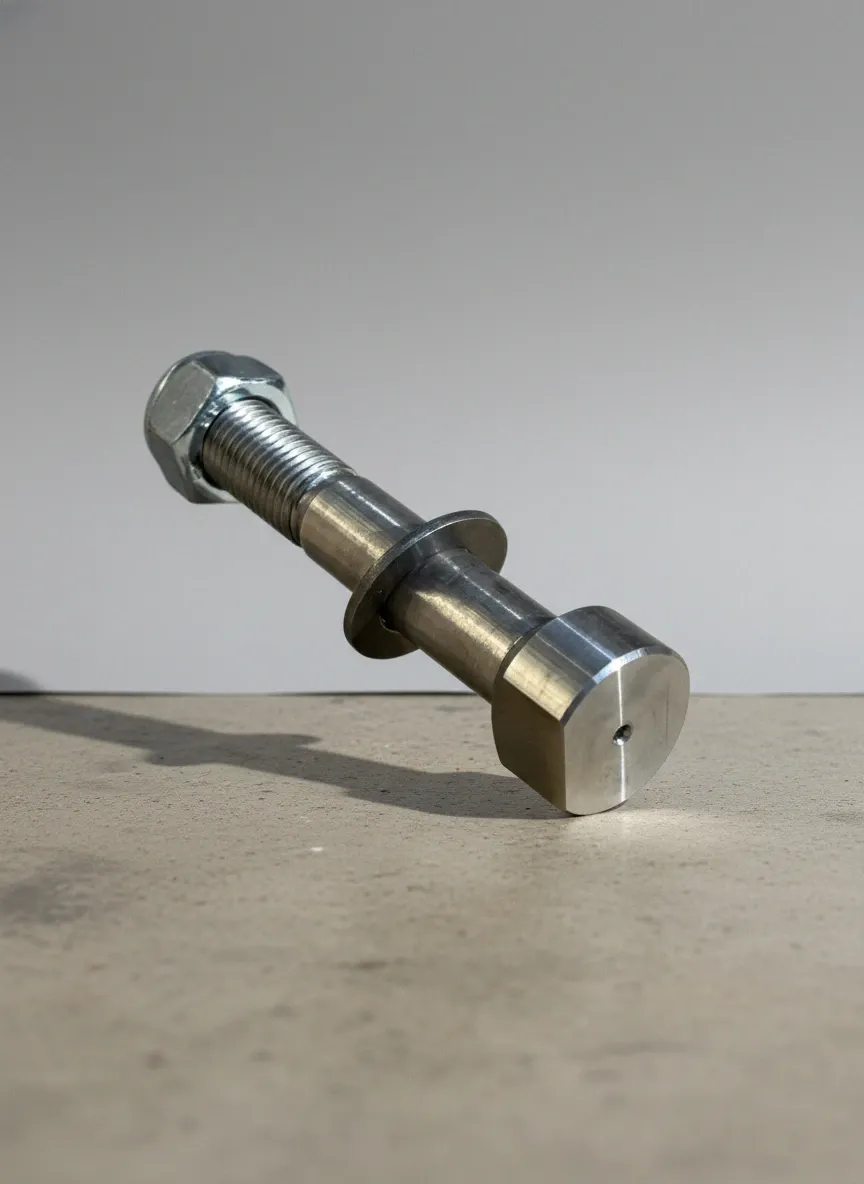
Certified high-strength fixation bolts with torque specifications — Grade 10.9 and 12.9 per ISO 898-1
Key Features of ATF Fixation Bolts
High-Strength Grades
Grade 10.9 (830 MPa yield) and Grade 12.9 (970 MPa yield) fasteners selected based on original design requirements.
Correct Thread Specifications
Metric and imperial thread forms matched to your rotor design. Thread engagement length verified for safe loading.
Head Configurations
Hex head, socket head, and countersunk options to match OEM designs. Correct head height prevents interference.
Surface Treatments
Zinc plating, phosphate coating, or plain finish based on application requirements and corrosion resistance needs.
Complete Kits
Full fastener kits including bolts, nuts, washers, and lock washers as required by the retention system design.
Torque Documentation
Torque specifications provided for all fastener sizes and grades. Proper torque is critical for safe operation.
Need Fixation Bolts for Your HSI?
Send your rotor model for a complete fastener kit with correct grades and torque specifications.
OEM Compatibility
ATF supplies complete fastener kits for all major HSI crusher brands. Kits include all bolts, nuts, and washers required for complete rotor service.
Metso
- NP1007, NP1110, NP1213, NP1315, NP1520
- Lokotrack LT1110, LT1213, LT1315
Sandvik
- CI411, CI511, CI611, CI711, CI821
- QI240, QI340, QI440, QI540
Terex
- Finlay I-100, I-110, I-120, I-130, I-140
- Trakpactor 230, 260, 320, 500
Kleemann
- MR 110, MR 130, MR 150, MR 170
Hazemag
- AP5, AP6, AP7
- APK30, APK40, APK50
McCloskey
- I34, I44, I54
Fixation Bolts FAQ
Trouvez les réponses aux questions courantes sur fixation bolts les matériaux, la sélection, la maintenance et les commandes. Vous ne trouvez pas ce que vous cherchez ?
Contacter notre équipeHow often should fixation bolts be replaced?
Can I reuse bolts if they look OK?
What happens if I use the wrong torque?
Should I use thread locker on crusher fasteners?
Contenu technique révisé par l'équipe d'ingénierie ATF | Spécifications métallurgiques vérifiées selon les normes ASTM/ISO
Order Complete Fastener Kits
Provide your rotor model for a complete kit with correct grades, sizes, and torque specifications.
Contact ATF