

Spécifications clés
- Spider Cap Material
- High-strength alloy steel casting (200-250 HB)
- Bushing Material
- C93200 leaded tin bronze (SAE 660)
- Arm Liner Grade
- Mn14-Mn18 manganese steel per ASTM A128
- Bushing Clearance
- OEM-specified radial clearance per crusher model
- Shield Material
- AR360-AR450 abrasion-resistant plate
- Lubrication
- Automatic grease system, NLGI #2 EP grease typical
Key Features of ATF Spider Components
Spider Caps
Cast steel spider caps machined to house bronze bushings with correct clearances and lubrication provisions.
Spider Bushings
Bronze or babbitt-lined bushings manufactured to OEM specifications for proper shaft support.
Arm Liners
Manganese steel arm liners that protect spider arms from material impact and abrasion.
Rim Liners
Wear liners that protect the spider rim from material flow around the crushing chamber top.
Complete Assemblies
Complete spider assemblies available including cap, bushing, and all wear components.
Repair and Rebuild
Worn spider castings can often be repaired and rebuilt rather than replaced entirely.
Spider Assembly: Upper Shaft Support for Gyratory Crushers
The spider assembly is the structural framework that supports the upper end of the main shaft in gyratory crushers, maintaining shaft alignment while transmitting radial and axial loads into the top shell structure. The assembly consists of the spider cap casting, which houses the spider bushing, typically two to four spider arms that bridge from the cap to the top shell rim, and various wear components that protect these critical structural elements from material damage. The spider cap is manufactured from high-strength alloy steel casting at 200-250 HB, precision-machined to accept the spider bushing with correct interference fit for heat transfer and prevention of bushing rotation. The spider must absorb both continuous radial loads from the gyratory oscillating motion and intermittent impact loads from oversized feed material falling through the feed opening.
Spider components operate in one of the harshest environments in the crushing plant, continuously exposed to falling run-of-mine material, airborne dust, moisture, and extreme temperature variations in outdoor installations. Spider arm liners manufactured from Mn14-Mn18 manganese steel per ASTM A128 protect the structural arm castings from impact and abrasion as feed material deflects off the arms entering the crushing chamber. Rim liners shield the spider rim from material circulation at the top of the chamber. The spider bushing, typically cast from C93200 leaded tin bronze (SAE 660), provides the bearing surface for shaft oscillation and requires consistent lubrication with NLGI #2 EP grease delivered by automatic lubrication systems. Regular inspection and timely replacement of spider wear components prevents expensive damage to the major structural castings, which can cost ten times or more than the protective liner components.
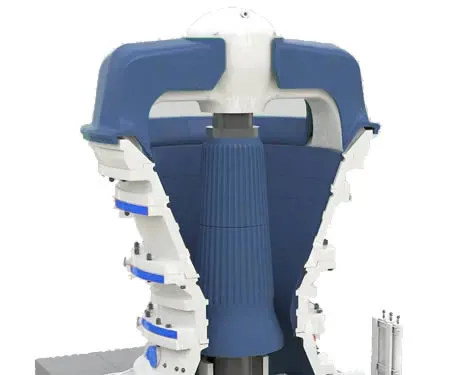
Spider cap, arm segments and bushing assemblies — precision-machined to maintain shaft alignment under heavy loading
OEM Compatibility
ATF supplies spider assembly components for all major gyratory crusher brands with correct specifications.
Metso
- Superior MKII (42-65, 50-65, 54-75, 60-89, 60-110)
FLSmidth
- XL Series (42-65, 54-75, 60-89)
Sandvik
- CG Series (CG820, CG850)
ThyssenKrupp
- KB Series (54-75, 60-89, 63-114)
Fuller Traylor
- NT Series, T Series
Allis Chalmers
- Superior Gyratory Series
Need Spider Assembly Components?
Send your crusher model for a quote on spider caps, bushings, or protective liners.
Spider Component Materials
Spider components are manufactured from materials selected for their specific function—structural strength for the casting, wear resistance for liners, and bearing properties for bushings.
| Matériau | Dureté | Application | Notes |
|---|---|---|---|
| Cast Steel (Spider Cap) | 200-250 HB | Main spider structure and bushing housing | High-strength alloy steel casting |
| C93200 Leaded Bronze (Bushing) | 60-70 HB | Standard spider bushings | Good load capacity and lubricity |
| Mn14-Mn18 Manganese (Liners) | 200-240 HB | Arm liners and rim liners | Impact and abrasion protection |
| AR Plate (Shields) | 360-450 HB | Dust shields and protective covers | Cost-effective wear protection |
Cast Steel (Spider Cap)
C93200 Leaded Bronze (Bushing)
Mn14-Mn18 Manganese (Liners)
AR Plate (Shields)
Note: Spider component specifications vary by crusher model. Contact ATF with your crusher details for correct part identification.
Spider Assembly FAQ
Trouvez les réponses aux questions courantes sur spider assembly les matériaux, la sélection, la maintenance et les commandes. Vous ne trouvez pas ce que vous cherchez ?
Contacter notre équipeHow often should spider bushings be replaced?
What causes spider arm liner wear?
Can worn spider castings be repaired?
How critical is spider bushing lubrication?
Contenu technique révisé par l'équipe d'ingénierie ATF | Spécifications métallurgiques vérifiées selon les normes ASTM/ISO
Order Spider Assembly Components
Provide your crusher model for quotation on spider components.
Contact ATF Engineering